
How to get around Spain by high-speed train, bus, plane, and car, with route times, fare ranges, and when each option is worth it.
By Kirill L.
The easiest way to get around Spain is by train. The high-speed network links Madrid, Barcelona, Seville, Valencia, and Málaga in roughly 2-3 hours, three operators now compete on the busiest routes (which has pushed fares down hard), and you almost never need a rental car unless you are heading into Andalusia's white villages or the Picos de Europa. Save the car for the back roads.
Spain runs the longest high-speed rail network in Europe and the second-longest on the planet after China: about 3,973 km of track as of early 2026, per Wikipedia's high-speed rail summary. What that means for you, the traveler, is simple. You can wake up in Madrid, eat lunch in Seville, and be back for dinner, all without touching a steering wheel. After routing a lot of Spain trips through Zenvoya, we see the same overcorrection again and again: people book a car for two weeks, then realize most of their nights are in city centers where the car just racks up parking fees. Here is how to actually move around Spain, mode by mode, with real euro pricing and an honest take on when each one wins.
Spain Transport at a Glance
Fastest option: the AVE high-speed train. Top speed 310 km/h, Madrid to Barcelona in about 2 hours 30 minutes (roughly 500 km).
Three high-speed operators: Renfe (state-owned, runs AVE and budget Avlo), Iryo (private), and Ouigo (budget, double-decker). They compete on the main lines, which is great for your wallet.
Cheapest long-distance option: the bus. ALSA covers the whole country, and fares often undercut walk-up train prices, though trips take longer.
Driving shines off the rails: Andalusia's white villages, the Picos de Europa, rural Catalonia, and the Costa Brava back roads. Skip the car for any trip that stays city-to-city.
Inside cities: Madrid and Barcelona both have excellent metros. A single ride runs about €1.50-2.55, and day passes pay off fast.
How Does Spain's Train System Actually Work?
Spain's rail backbone is the AVE (Alta Velocidad Española), launched in 1992 on the Madrid-Seville line and now reaching most major cities. Until recently, Renfe, the state operator, had a monopoly. Then the European Union opened the tracks to competition. Today three companies race each other on the busiest corridors, and prices have dropped accordingly.
Here is the catch that trips up first-timers: the train "class" you book matters as much as the operator. A high-speed AVE and a slow regional train can serve the same two cities with a two-hour difference in journey time. Pick wrong and a quick hop becomes half a day.
Spain Train Types: What Each One Does
Train Type | Operator | Speed | What It's For | Booking | Typical Fare |
|---|---|---|---|---|---|
AVE | Renfe | up to 310 km/h | Flagship high-speed: Madrid, Barcelona, Seville, Valencia, Málaga | Reserved seat | €25-95 |
Avlo | Renfe | up to 310 km/h | Budget high-speed, same tracks as AVE, fewer frills | Reserved seat | €7-60 |
Iryo | Iryo (private) | up to 300 km/h | High-speed on Madrid-Barcelona, Madrid-Valencia/Seville/Málaga | Reserved seat | €18-70 |
Ouigo | Ouigo (private) | up to 300 km/h | Budget double-decker high-speed, main corridors | Reserved seat | €9-50 |
Alvia / Intercity | Renfe | up to 250 km/h | Longer routes onto non-high-speed track (the north, Galicia) | Reserved seat | €25-65 |
Avant | Renfe | up to 250 km/h | Medium-distance high-speed (Madrid-Toledo, Seville-Córdoba) | Reserved seat | €10-30 |
Media Distancia | Renfe | up to 160 km/h | Regional routes, smaller towns | No reservation | €8-25 |
Cercanías | Renfe | up to 140 km/h | City commuter rail (Madrid, Barcelona, and other metros) | No reservation | €1.70-5 |
Train types and speeds per Renfe and seat61. Fares reflect advance booking in standard class; walk-up prices run significantly higher.
For tourists, the AVE, Avlo, Iryo, and Ouigo trains do almost all the heavy lifting. They run station-center to station-center, so you skip airport transfers entirely. The slower Media Distancia and Cercanías trains fill in the short hops and day trips.
Spain by Train: The Routes Worth Knowing
This is where rail earns its reputation. Most of Spain's iconic city pairs connect by high-speed train in under three hours, and because three operators compete on the big routes, advance fares can be absurdly cheap. The Madrid-Barcelona run alone has around 30 trains a day across the operators.
Book early. Spanish high-speed fares work like budget-airline pricing: cheapest 1-3 months out, climbing as the date approaches. On most routes, tickets open between 60 days and several months ahead.
Common Spain Rail Routes: Times and Fare Ranges
Route | Distance | Fast Time | Operators | Advance Fare | Walk-Up Fare |
|---|---|---|---|---|---|
Madrid to Barcelona | ~500 km | 2h 30m | Renfe AVE, Avlo, Iryo, Ouigo | €15-40 | €90-180 |
Madrid to Seville | ~390 km | 2h 30m | Renfe AVE, Iryo | €25-55 | €80-130 |
Madrid to Valencia | ~300 km | 1h 50m | Renfe AVE, Iryo, Ouigo | €15-40 | €60-90 |
Madrid to Málaga | ~430 km | 2h 30m | Renfe AVE, Iryo | €30-60 | €80-120 |
Madrid to Córdoba | ~340 km | 1h 45m | Renfe AVE, Iryo | €25-50 | €70-100 |
Barcelona to Valencia | ~300 km | 2h 50m | Renfe (Euromed), Ouigo | €20-45 | €50-80 |
Seville to Córdoba | ~130 km | 45m | Renfe AVE, Avant | €13-30 | €30-45 |
Madrid to Granada | ~420 km | 3h 15m | Renfe AVE | €30-55 | €70-100 |
Route times and fare ranges compiled from Renfe, Trainline, and seat61, early 2026. High-speed operators use dynamic pricing, so exact fares shift daily.
A few things worth saying out loud. The Madrid-Barcelona route is the crown jewel: it is the most competitive corridor in the country, and if you book a Ouigo or Avlo train a couple of months out, you can sometimes cross half of Spain for less than a taxi to the airport. Seville to Córdoba is a 45-minute blink, which makes a Córdoba day trip from Seville one of the great easy wins in Andalusia.
Pro tip: Cross-shop the operators. Renfe's site does not show Iryo or Ouigo, and vice versa. Search your route on each operator plus an aggregator like Trainline, then book whichever is cheapest for your date and time. The savings between operators on the same route can be 50% or more.
Booking Spain Trains: Renfe, Iryo, and Ouigo Without the Headache
The booking process confuses people because there is no single official site that sells every train. Each operator runs its own platform.
For city-to-city high-speed travel, decide on your date and time first, then compare. Renfe sells AVE and the budget Avlo. Iryo and Ouigo each sell only their own trains. Aggregators like Trainline, Rail Europe, and Omio show all operators side by side for a small booking fee, which is worth it if you would rather not juggle three websites.
Renfe's own website has a reputation for being clunky, occasionally rejecting foreign credit cards, and timing out mid-purchase. It is not a myth. If Renfe's site fights you, an aggregator usually pushes the booking through cleanly. Once booked, you get a PDF or app ticket with a QR code: no need to print, just show your phone at the platform gate.
How to book the cheapest Spain train fare
Decide your exact date and rough time window first. Fares swing wildly by departure.
Search the route on Renfe, Iryo, and Ouigo (or one aggregator that shows all three).
Book 1-3 months out for the lowest fares. Same-week prices can be 4-5x higher.
Choose the cheapest fare tier that fits. The non-refundable "básico" tiers are usually fine for a fixed itinerary.
Save the QR-code ticket to your phone. Arrive 20-30 minutes early for the security check at major stations.
One quirk worth knowing: high-speed stations run airport-style bag scanners, a holdover from older security rules. It is quick, but it means you should not sprint up at the last minute the way you might for a regional train. Give yourself 20 minutes at Madrid Atocha or Barcelona Sants.
Buses in Spain: ALSA and the Budget Network
Spain's bus network is the unsung hero of budget travel and the only practical option for towns the high-speed trains skip. ALSA is the dominant national operator, with a modern fleet, comfortable long-distance coaches, and routes into corners of the country no train reaches. Avanza and a handful of regional companies fill in elsewhere.
When does the bus beat the train? Three situations. First, when you are on a tight budget and have time to spare: bus fares routinely undercut walk-up train prices. Second, when there is no high-speed line, which covers a lot of inland Andalusia, parts of Extremadura, and many smaller coastal towns. Third, for short regional hops where building a train connection would be more hassle than it is worth.
Bus vs. Train in Spain: Sample Comparisons
Route | Bus Time | Bus Fare | Train Time | Train Advance Fare |
|---|---|---|---|---|
Madrid to Seville | ~6h 30m | €20-35 | 2h 30m | €25-55 |
Granada to Seville | ~3h | €12-25 | ~3h (via Antequera) | €25-45 |
Madrid to Granada | ~5h | €18-32 | 3h 15m | €30-55 |
Barcelona to Valencia | ~4h 15m | €15-30 | 2h 50m | €20-45 |
Bus times and fares per ALSA; train comparisons per Renfe, early 2026. Bus fares are typically cheapest booked a week or more ahead.
The honest read: for the big high-speed corridors, the train wins on time and is often competitive on advance price, so take the train. The bus comes into its own for Granada, the Andalusian interior, and anywhere off the AVE map. There is also BlaBlaCar, a popular long-distance ride-share platform in Spain, if you want the cheapest option of all and do not mind riding with a local driver.
Pro tip: Granada sits a little awkwardly on the rail map, so the bus is genuinely competitive there. If you are going Seville to Granada or Córdoba to Granada, price the ALSA coach before you assume the train is faster.
Domestic Flights in Spain: When Flying Makes Sense
For mainland Spain, flying is usually the wrong call. By the time you add airport transfers, security, and boarding, a Madrid-Barcelona flight is slower door to door than the 2h 30m train, and the train drops you in the city center. The math only flips for the islands and the far corners.
Fly when you are heading to the Balearics (Mallorca, Menorca, Ibiza) or the Canary Islands, where there is no alternative short of a long ferry. Flying also makes sense for the longest mainland diagonals where no high-speed line connects directly, or when a budget carrier fare genuinely beats the train on both time and money. Vueling, Ryanair, Iberia, and easyJet all compete on Spanish domestic routes, and fares to the islands can be very cheap booked ahead. Spain's airports are run by Aena, whose site lists every airport and route.
Spain Domestic Flights: When to Fly vs. Take the Train
Route | Fly? | Why |
|---|---|---|
Madrid to Barcelona | No | Train is faster door-to-door and lands you in the center |
Madrid to Mallorca / Ibiza | Yes | No rail option; flight is the only quick way |
Barcelona to Canary Islands | Yes | Too far for rail or a short ferry |
Madrid to Seville | No | 2h 30m AVE beats flying once you count airport time |
Mainland to Menorca | Yes | Island; fly or take a longer ferry |
Guidance based on published schedules from Aena and operator timetables, early 2026. Island fares are usually cheapest booked weeks ahead.
Driving in Spain: When a Rental Car Earns Its Keep
Here is the part most "rent a car for your whole trip" advice gets wrong. For a city-focused itinerary, a car is a liability: you pay for parking you do not use, navigate low-emission zones, and leave it sitting in a garage while you ride the metro. But for the right kind of trip, a car unlocks Spain in a way no train can.
Rent a car for Andalusia's white villages (Ronda, Arcos de la Frontera, Zahara, the Pueblos Blancos route), for the Picos de Europa and the green north, for rural Catalonia and the Costa Brava's smaller coves, for La Rioja wine country, and for Mallorca's mountain roads. Skip the rental for any trip that stays inside Madrid, Barcelona, Seville, Valencia, or that hops between them, because the train does it better.
A few realities to plan around. Madrid and Barcelona both enforce low-emission zones (Zonas de Bajas Emisiones) in their central districts, monitored by cameras, with fines for unauthorized entry. Older or non-compliant vehicles can be restricted. Most historic city centers have narrow, one-way, permit-only streets that look drivable on a map and are not. And US travelers technically need an International Driving Permit (IDP) alongside their home license to drive in Spain; rental agencies and police can ask for it, so get one from AAA before you fly. Driving rules and signage are covered well by spain.info.
Spain Car Rental: Rough Daily Rates
Vehicle Class | Shoulder Season | Peak Summer | Notes |
|---|---|---|---|
Economy (Seat Ibiza, VW Polo) | €25-45 | €45-80 | Cheapest; fine for two people plus light bags |
Compact (VW Golf, Seat León) | €35-60 | €60-100 | Comfortable for longer rural drives |
Mid-size / SUV | €55-90 | €90-150 | Worth it for mountain roads or a family |
Manual transmission | Saves 15-25% vs. automatic | Same | Automatics are scarcer and pricier; reserve early |
Indicative rental rates from major platforms and agencies (Discover Cars, and direct quotes from the usual chains), early 2026. Rates exclude insurance and fuel. Peak summer covers July and August.
Two more notes from experience. Spanish rentals quote a base rate that excludes the collision waiver you will be pressured to buy at the counter for €15-25 a day; your premium travel credit card may already cover it, so check before you travel. And toll roads (autopistas, marked "AP") cost real money on long drives, while the free autovías (marked "A") often parallel them. Your navigation app can route you around tolls if you ask it to.
Routing Spain across 3 or more cities? Our AI trip planner sorts the train-versus-bus-versus-fly calls into a single itinerary, so you are not cross-shopping three rail operators at midnight or guessing whether Granada is faster by coach.
Getting Around Madrid: Metro, Walking, and Cercanías
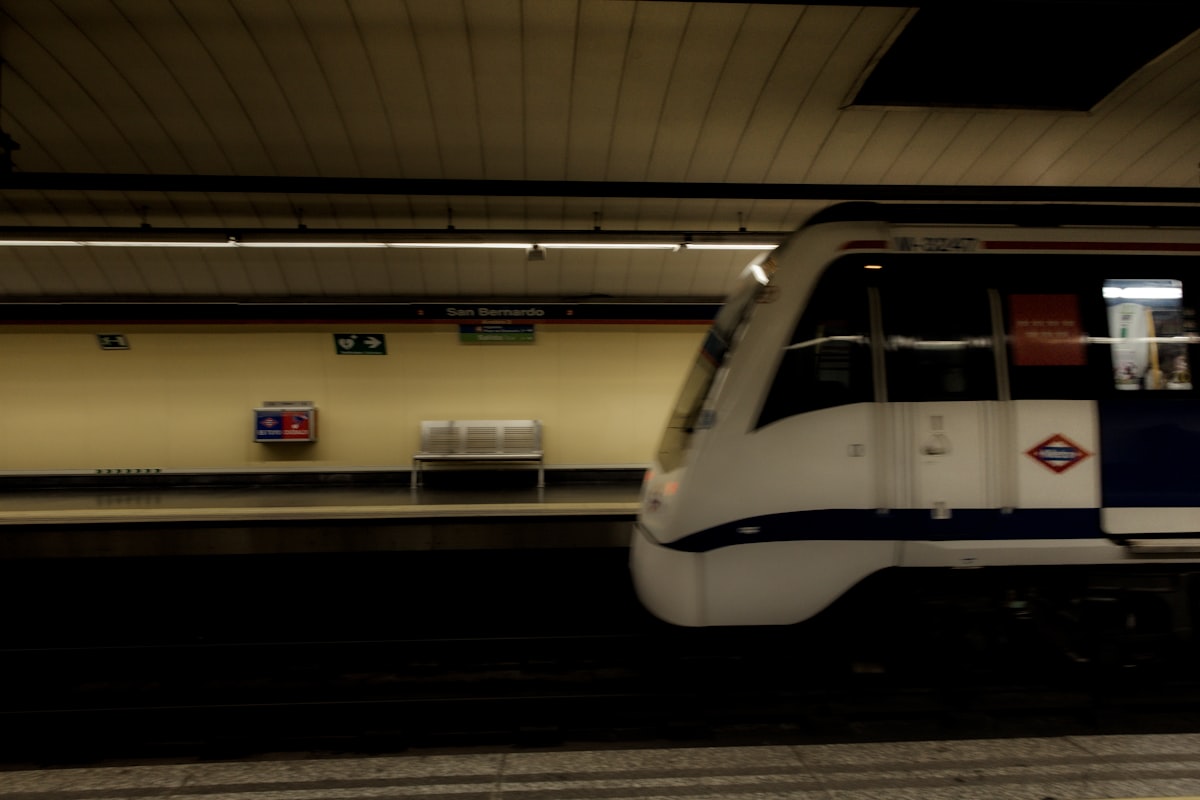
A train rolls into the platform in Madrid. Photo by Deniz Demirci on Unsplash
Madrid is a metro city, and the system is one of the best in Europe: clean, frequent, and reaching nearly everywhere a visitor wants to go. Do not rent a car here.
Metro. The Madrid Metro covers the entire core with 12 lines and links to both airport terminals (Line 8 to the airport carries a small supplement). A single ride is €1.50-2 depending on zones, and you load fares onto a reusable Tarjeta Multi card (about €2.50 for the card itself). For a few days of heavy sightseeing, the Tourist Travel Pass (Abono Turístico) gives unlimited metro, bus, and Cercanías for 1-7 days.
Walking. Central Madrid is more compact than it looks. The walk from Puerta del Sol to the Royal Palace, the Prado, or Plaza Mayor is 10-20 minutes through some of the prettiest streets in the city. Many days you will barely touch the metro.
Cercanías. Madrid's commuter rail handles day trips beautifully: Toledo, Alcalá de Henares, El Escorial, and Aranjuez are all reachable on Cercanías or a quick Avant high-speed hop. Fares run €4-14 round trip for most.
From Madrid-Barajas airport, the Metro (Line 8) into the center costs a few euros with the airport supplement, versus a flat €30 taxi fare set by city ordinance. The metro is faster than it sounds and drops you onto the main lines in about 15 minutes.
Getting Around Barcelona: Metro, the Airport Train, and Walking
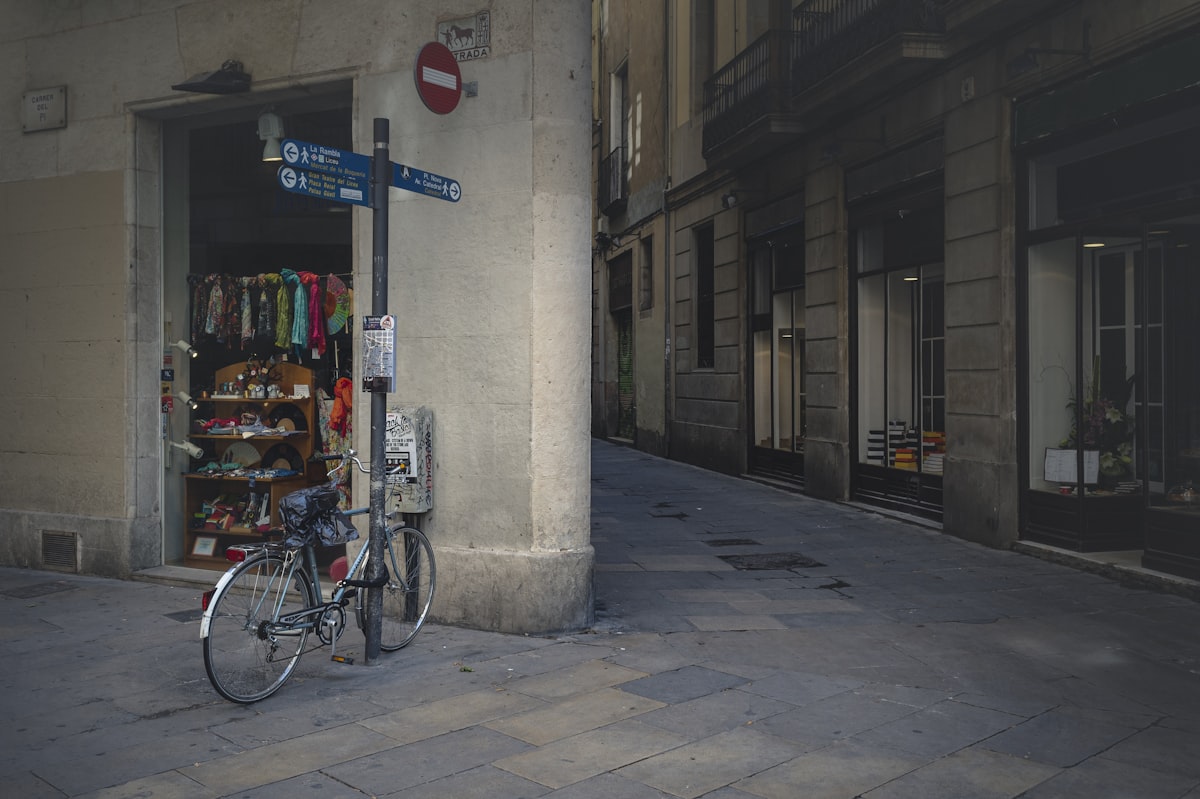
A walkable lane in Barcelona's Gothic Quarter. Photo by Egor Myznik on Unsplash
Barcelona is similarly metro-friendly and even more walkable in its old core. The historic center, from the Gothic Quarter to the Born, is a maze best explored on foot.
Metro. Run by TMB, the Barcelona Metro is fast and easy, with most tourist sights a short ride or walk apart. Skip single tickets; the T-casual card gives 10 rides at a steep per-ride discount, and the Hola Barcelona travel card offers unlimited travel for 2-5 days including the airport metro line. A single ride is about €2.55, while the per-ride cost on a T-casual drops well below that.
From the airport. El Prat airport connects to the center several ways: the R2 Cercanías train, the Aerobús express coach (about €7), or Metro Line 9 Sud. The train and metro both beat a €35-40 taxi for solo travelers.
Walking and the funicular. For Montjuïc and the views, there is a funicular and cable car; for the rest, your feet. Barcelona rewards wandering more than almost any Spanish city.
Pro tip: Buy the T-casual (10-ride) card even for a short stay. Two people can share one card by tapping it twice at the turnstile, so a single 10-ride card can cover a couple for a few days of normal sightseeing.
Spain Rail Passes: Eurail and the Renfe Spain Pass, Worth It?
Usually not, if you are doing a focused Spain trip with a few high-speed legs. The reason is the same as in Italy: Renfe, Iryo, and Ouigo run aggressive advance pricing that often beats the per-day cost of a pass, and AVE trains charge a seat-reservation fee on top of most passes anyway.
A Eurail or Interrail pass starts to make sense when Spain is one leg of a bigger European rail trip, when you are taking 6 or more long-haul trains and value the flexibility to hop on without re-pricing, or when you are buying last-minute and walk-up fares have spiked. If your itinerary is mostly fixed and you can book a few weeks out, individual tickets almost always win. We dig into the full break-even math in our guide to whether the Eurail Pass is worth it, which runs the numbers route by route.
One trap to plan around: even with a pass, you must reserve (and pay a small fee for) a seat on AVE and most high-speed trains, and those reservations are capped per train. Book the seats early in summer, because the pass does not guarantee a spot once the quota fills.
Ready to Plan Your Spain Trip?
Mapping Spain across Madrid, Barcelona, Seville, and a couple of Andalusian towns means juggling three rail operators, deciding when the bus or a flight wins, and knowing which cities to leave the car behind in. That is exactly the kind of planning that eats an evening. Zenvoya's AI trip planner builds a full Spain itinerary with station-to-station routing, mode picks for each leg, and hotels placed where you will not need a car, so you know how you are getting around before you ever leave home.
For more on moving around Europe by rail, see our guides to getting around Italy and getting around Iceland, plus our roundup of the best summer vacation destinations.
The Bottom Line
Spain is built for train travel. The high-speed network covers the spine of the country, three operators compete to undercut each other on fares, and the biggest cities are walkable with metros that make rental cars pointless. Book your AVE, Avlo, Iryo, or Ouigo trains a few weeks out, cross-shop the operators, and reach for the bus when you are heading somewhere the rails do not, like Granada or the Andalusian interior. Save the rental car for the white villages and the green north, where it genuinely sets you free.
Get those calls right and Spain becomes one of the easiest, and most rewarding, countries in Europe to explore.