
When to visit Japan for cherry blossoms, fall foliage, fewer crowds, or lower prices, broken down month by month with weather, costs, and what's on.
Best Time to Visit Japan: Month-by-Month Guide
By George C.
Ask ten people when to go to Japan and you'll get ten answers, all of them right. Spring gets you cherry blossoms. Fall gets you fiery maples and thinner crowds. Winter gets you powder snow and empty temples. Summer gets you festivals, fireworks, and sweat. There's no single best time to visit Japan; there's a best time for the trip you want.
This guide breaks the year down month by month so you can match the weather, the crowds, the cost, and what's actually happening on the ground to your own travel style. We'll cover spring and the famous sakura season, the humid-but-festive summer, the underrated fall foliage window, and the quiet beauty of winter. You'll also get a quick-glance comparison table, the real timing on cherry blossoms (it's narrower than most people think), and answers to the questions travelers ask most.
If you'd rather skip the spreadsheet and just see a trip take shape, Zenvoya can build a Japan itinerary around the season you pick. But first, let's figure out which season that is.
Japan at a Glance: When to Go
Best overall weather: Spring (late March to May) and fall (October to November), with mild temps and clear skies.
Cherry blossoms (sakura): Late March to early April in Tokyo and Kyoto; earlier in the south, later in the north.
Fall foliage (koyo): Mid-November to early December in central Japan.
Cheapest and quietest: Late January to February and June (rainy season), outside holidays.
Avoid if you hate crowds: Cherry blossom peak, Golden Week (late April to early May), and Obon (mid-August).
Japan's Seasons in One Table
Before the month-by-month detail, here's the year at a glance. Japan stretches a long way north to south, so treat these as the central Honshu baseline (think Tokyo, Kyoto, Osaka). Hokkaido runs colder; Okinawa runs subtropical.
Season | Months | Weather (Tokyo/Kyoto) | Crowds | Relative Cost | What's On |
|---|---|---|---|---|---|
Spring | Mar-May | Mild, 50-70°F, clear | Very high at sakura peak | High | Cherry blossoms, hanami, Golden Week |
Summer | Jun-Aug | Hot, humid, 80-90°F | Moderate, spikes at Obon | Moderate | Rainy season, festivals, fireworks |
Fall | Sep-Nov | Crisp, cooling, 55-75°F | Moderate, rising late | Moderate to high | Fall foliage, harvest, fewer crowds |
Winter | Dec-Feb | Cold, dry, 48-56°F | Low outside holidays | Low | Snow, skiing, illuminations, onsen |
Temperature ranges are central Honshu daytime averages based on Japan Meteorological Agency climate normals. Hokkaido and Okinawa differ substantially.
The short version: spring and fall are the crowd-pleasers, winter is the value play, and summer is for people who chase festivals more than comfortable weather. Now let's go season by season.
Spring (March to May): Cherry Blossoms and Peak Everything
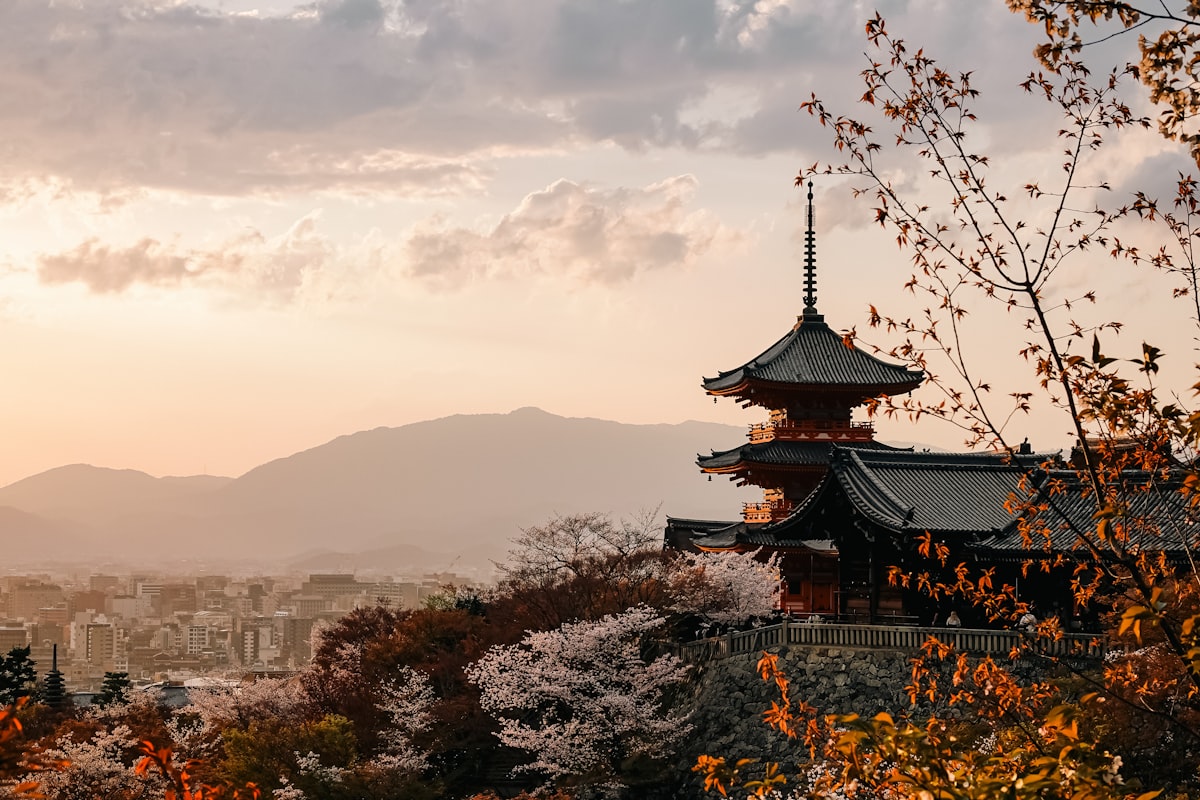
Cherry blossoms frame a Kyoto temple at sunset. Photo by Nathalie Lays on Unsplash
Spring is when Japan shows off. Temperatures sit in the comfortable 50-70°F range, skies are mostly clear, and the whole country tilts toward the outdoors for hanami, the centuries-old tradition of picnicking under cherry blossoms. According to the Japan National Tourism Organization, spring and fall are the two seasons when the country is at its most vibrant, and the numbers back it up: this is peak season for a reason.
It's also the most expensive and most crowded window of the year, especially during the blossom peak and the run of public holidays at the end of April. If you want spring without the squeeze, aim for early March (before the blossoms) or mid-to-late May (after Golden Week), when the weather is lovely and the crowds thin out.
Cherry blossom season folds into spring, but it deserves its own breakdown because the timing is tighter and more location-dependent than people expect. More on that just below.
A few spring logistics worth knowing:
Golden Week runs from late April into the first week of May, stringing together four national holidays. Trains, hotels, and flights sell out, and domestic prices jump. It's a fascinating time to see Japan moving, but a brutal time to book last minute.
Layers are your friend. Spring mornings and evenings can dip into the 40s°F even when afternoons feel like sweater weather.
May is quietly one of the best months, with warm days, green hills, and far fewer tourists than April.
Pro tip: If sakura is the whole reason you're going, build in 3-4 flexible days. Peak bloom (mankai) lasts only about a week per city, and a warm or rainy stretch can shift it. Booking refundable hotels gives you room to chase the forecast.
Cherry Blossom Season: When and Where to Catch the Sakura

Somei Yoshino blossoms open against a blue sky. Photo by Larry Hsu on Unsplash
Here's the thing about Japan's cherry blossom season: it isn't one date, it's a wave. The bloom starts in the warm south and rolls north over several weeks, so the "right" time depends entirely on where you're standing.
The Japan Meteorological Corporation and Japan National Tourism Organization track the sakura front as it moves up the islands. For the big-ticket cities most first-timers visit, the classic window is late March to early April. Per the japan-guide.com 2026 cherry blossom forecast, Tokyo's blooms were timed at roughly March 28 to April 4 and Kyoto's at March 29 to April 5, with Fukuoka in the south opening a few days earlier around April 1 to 8.
Here's how the bloom typically rolls across the country:
Region | Typical Peak Bloom | Notes |
|---|---|---|
Okinawa | January to February | Earliest in Japan, different cherry variety |
Fukuoka / Kyushu | Late March to early April | Southern Honshu and Kyushu lead the mainland |
Tokyo | Late March to early April | Meguro River, Ueno Park, Shinjuku Gyoen |
Kyoto / Osaka | Late March to early April | Philosopher's Path, Maruyama Park |
Sapporo / Hokkaido | Late April to early May | Latest peak, often overlaps Golden Week |
Peak bloom windows reflect the japan-guide.com 2026 forecast; actual dates shift year to year with temperatures, so check the current forecast before booking.
Two things people get wrong. First, full bloom is brief: roughly a week from when a city hits mankai, and a hard rain can cut it short. Second, you don't need to be in the absolute peak to enjoy it. The week of early buds and the week of falling petals (hanafubuki, when blossoms drift down like snow) are gorgeous and far less mobbed.
If you're set on a specific city's peak, watch the forecast that the meteorological agencies update through late winter and book flexible. Tokyo and Kyoto are the most predictable big-city bets; Hokkaido is your move if you want sakura that lines up with the Golden Week break. One more move worth making: skip the famous parks at midday on weekends, when they're packed shoulder to shoulder. Go at sunrise for photos, or wander a quieter neighborhood canal, since some of the best hanami happens on small residential streets nobody's geotagging.
Summer (June to August): Festivals, Humidity, and a Rainy Start
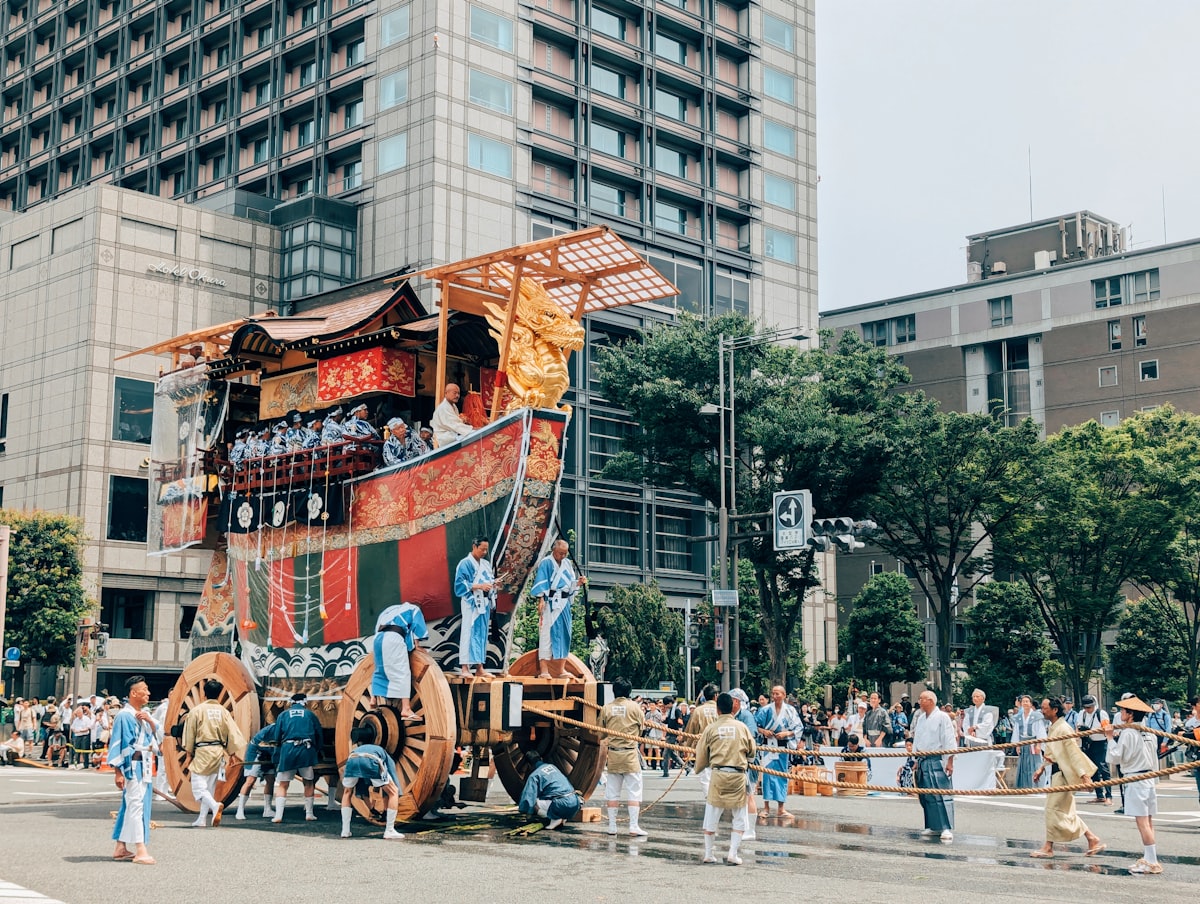
A towering Gion Matsuri float rolls through Kyoto in July. Photo by note thanun on Unsplash
Summer in Japan is a trade-off, and you should know what you're signing up for. June kicks off with tsuyu, the rainy season, which soaks most of the country (except Hokkaido) from early June through mid-July. July and August then turn hot and sticky, with central Honshu regularly hitting the upper 80s to low 90s°F and humidity that makes it feel hotter. The Japan Meteorological Agency also flags this as typhoon season, which ramps up in August and September.
So why go? Because summer is when Japan throws its best parties. This is festival (matsuri) season, with Kyoto's month-long Gion Matsuri in July, Osaka's Tenjin Matsuri, and fireworks (hanabi) displays lighting up rivers across the country on summer nights. Locals trade their work clothes for cotton yukata, and street food stalls take over. If you want energy and color over comfortable weather, summer delivers.
It's also a smart season for the extremes of the country. Head north to Hokkaido for cool, dry weather and lavender fields, or south to Okinawa for beach time (though that's also when typhoons are most likely there).
Practical notes for a summer trip:
Rainy season isn't a washout. June rain tends to come in bursts, not all-day downpours, and the upside is lush green landscapes and lower crowds. Hydrangeas (ajisai) are stunning this month.
Hydrate and plan indoor breaks. Museums, department-store basements (depachika), and air-conditioned cafes are lifesavers in August heat.
Obon, in mid-August, is a major travel holiday when many Japanese return to their hometowns. Expect crowded transit and higher prices for that week.
Pro tip: If you visit during rainy season, pack a compact umbrella and quick-dry shoes, then plan your trip loosely. Convenience stores sell cheap clear umbrellas everywhere, so don't stress if you get caught out.
Fall (September to November): Foliage and the Sweet Spot

Autumn maples surround a traditional Japanese pavilion. Photo by Micah Young on Unsplash
Ask seasoned Japan travelers for their favorite season and a lot of them say fall, often more confidently than spring. The reasoning is simple: you get scenery that rivals the cherry blossoms with crowds that (until late November) are noticeably thinner. After the summer heat breaks, usually by late September, temperatures settle into a crisp, comfortable 55-75°F with clear skies.
The headline act is koyo, the fall foliage, when maples and ginkgos turn the country red and gold. Unlike spring's bloom, which moves south to north, the autumn colors roll north to south and from high elevation down. Hokkaido and the mountains turn first, in late September and October, while central Japan's famous spots peak later. In Kyoto, the maples typically hit their best from mid-to-late November into early December, which is why temples like Tofuku-ji and Eikan-do draw such crowds in that window.
September comes with one asterisk: it's still the tail end of typhoon season, so an early-fall trip can include a stormy day or two. By October, that risk drops and the weather is about as reliable as Japan gets.
Where to chase the color:
Kyoto and Nara: Temple gardens and maple-lined paths peak mid-to-late November.
Nikko and Hakone: Mountain foliage turns earlier, often late October to early November, and pairs well with onsen.
Tohoku and the Japanese Alps: Late October for dramatic, less-touristed landscapes.
Fall is also a strong food season, with new-harvest rice, chestnuts, persimmons, and matsutake mushrooms on menus. Prices sit below spring's peak for most of the season, though the late-November foliage rush in Kyoto can push hotel rates up.
Pro tip: For fall color without the Kyoto crush, base yourself in a smaller hub like Kanazawa or head into the Japanese Alps. You'll get foliage just as vivid and actually be able to take a photo without forty people in it.
Winter (December to February): Snow, Onsen, and Low-Season Value
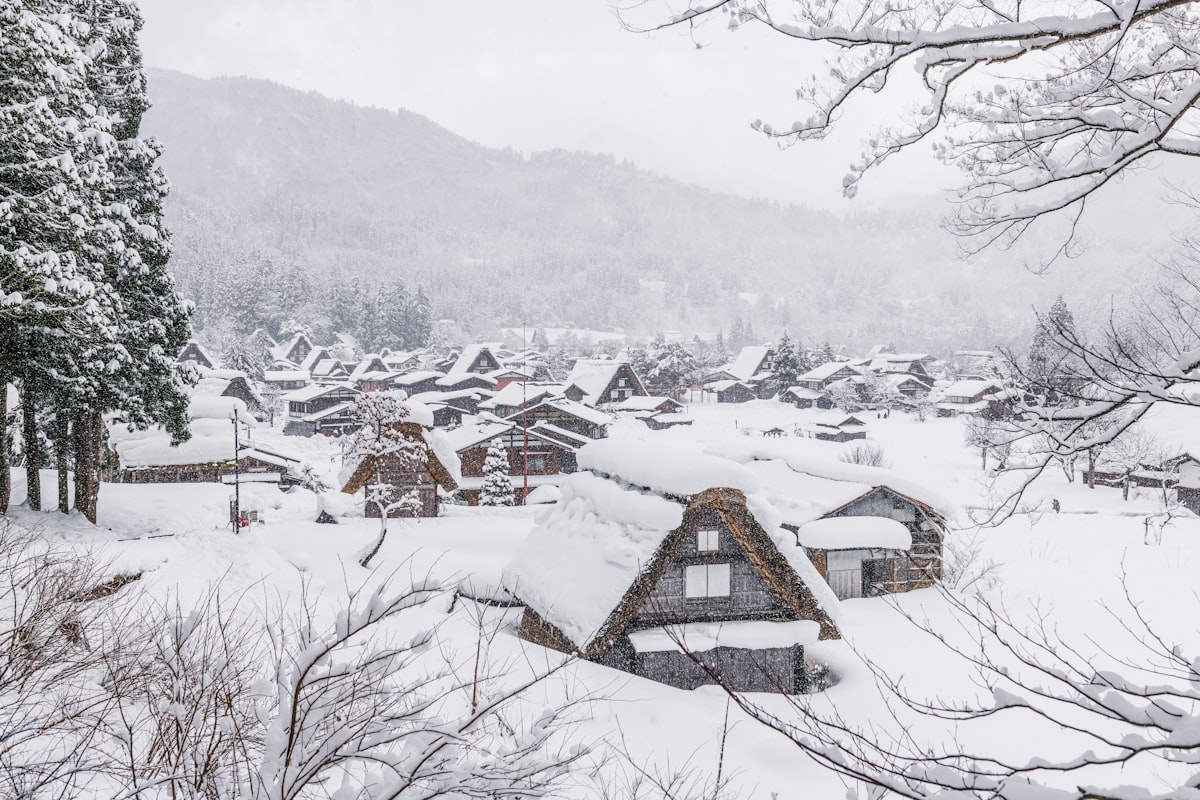
A thatched-roof village sits under deep winter snow. Photo by Hyungman Jeon on Unsplash
Winter is Japan's most underrated season, and its best value. Outside the New Year holiday, crowds thin out, flight and hotel prices drop, and famous sights you'd fight through in April feel almost peaceful. Central Honshu winters are cold but dry: highs usually run about 48-56°F in Tokyo and Kyoto, with lows in the mid-30s to low 40s, per Japan Meteorological Agency normals. Skies are crisp and sunny, which makes for excellent photos. The travel publication Condé Nast Traveler has gone as far as calling winter the best time for an all-purpose trip, with the caveat to go after the New Year's rush.
That rush matters. The days around New Year (oshogatsu) are the single most important holiday in Japan, when many businesses close and domestic travel surges. Aim for mid-January through February, outside Lunar New Year, and you'll catch the quietest, cheapest stretch of the entire year.
Winter is also a season with its own marquee experiences:
Skiing and snowboarding: Hokkaido (Niseko) and Nagano get some of the lightest, deepest powder on the planet, with the season running roughly December through March.
Onsen: There's nothing like soaking in an outdoor hot spring while snow falls around you. Mountain towns like Hakone, Kusatsu, and Nyuto deliver.
Winter illuminations: Cities go all-in on light displays from December onward, and the Sapporo Snow Festival in early February is a bucket-list event.
Snow monkeys: The macaques bathing in hot springs at Jigokudani near Nagano are at their photogenic best in winter.
Pack a real coat and layers, especially for the north or the mountains, but don't write off winter cities. A clear, cold day in Kyoto with frost on the temple roofs and no tour groups in sight is hard to beat. And keep February on your radar: it sits in the low season for crowds and prices yet leads straight into the spring buzz, with Okinawa's early cherry blossoms already opening. It's a sleeper month for a value-minded trip.
When to Visit Based on What You Want
Seasons are one lens. Your priorities are another. Here's how to match the two.
If you want... | Go in... | Why |
|---|---|---|
Cherry blossoms | Late March to early April | Peak bloom in Tokyo and Kyoto |
Fall foliage | Mid-to-late November | Koyo peaks in central Japan |
Lowest prices and fewest crowds | Mid-January to February, or June | Deep low season and rainy season |
Skiing and powder snow | December to March | Hokkaido and Nagano resorts |
Best all-around weather | May or October | Mild, dry, clear, post-peak |
Beaches in Okinawa | April to early July, or September to October | Warm water, lower typhoon risk than peak summer |
Recommendations reflect central Honshu and Okinawa seasonal patterns; confirm regional timing before you book.
Notice that the "best" month flips depending on the single thing you care about most. That's the whole game with Japan. Pick your priority first, then let the calendar follow.
How to Plan Your Japan Trip Around the Seasons
Once you've picked a season, a little timing strategy goes a long way. Cherry blossom and fall foliage peaks are the two windows where booking early genuinely matters: lock in hotels three to six months out for late March, April, and late November, because the best-located places sell first. The same goes for any trip overlapping Golden Week or New Year.
For shoulder months (May, early summer, February), you have far more flexibility and can often book a month or two ahead without much penalty. Whenever you go, decide early whether you'll lean on the rail network, since a Japan Rail Pass only pays off if your route covers enough long-distance ground. Our Japan transportation guide breaks down when the pass is worth it and how to get around without one.
From there it's about sequencing: which cities, in what order, with side trips that suit the season (foliage day trips in fall, onsen towns in winter, festival stops in summer). If mapping that out by hand sounds like a lot, you can hand the season and your dates to Zenvoya's AI trip planner and get a structured itinerary back, then tweak it. For destination ideas to slot in, our guides to the best places to visit in Japan and a ready-made Japan travel itinerary are good starting points.
Ready to Plan Your Japan Trip?
The hardest part of a Japan trip is usually deciding when to go, and you've just done that. The next step is turning a season into an actual route: cities, days, side trips, and the logistics that tie them together. You can describe your dates and what you're after, blossoms, snow, festivals, foliage, to Zenvoya's AI trip planner and get a season-appropriate itinerary you can adjust in minutes. Less time wrestling tabs, more time looking forward to the trip.
The Bottom Line
If you're a first-timer who wants the postcard version of Japan, target early April for cherry blossoms or mid-November for fall color, book three to six months out, and build in a few flexible days to chase the forecast. If you'd rather have the country to yourself and keep costs down, February is the quiet, underrated answer, with snow in the mountains and frost-rimmed temples nearly empty. The best time to visit Japan is whenever it matches the trip you actually want to take. Pick the season that excites you most, and the rest falls into place.