
Plan your Japan trip with this guide to the best cities to travel in Japan. Real costs, neighborhood tips, and logistics for Tokyo, Kyoto, Osaka, and beyond.
Japan hits different from anywhere else on the planet. One day you're standing in a 400-year-old bamboo grove, the next you're ordering ramen from a vending machine in a neon-lit alley. The contrast isn't a side effect of visiting Japan. It is the whole point.
This guide breaks down the best cities to travel in Japan, with real costs, logistics, and the kind of tips you actually need (not just "try the sushi"). If you're a first-timer figuring out where to start or a repeat visitor looking for your next base, these are the travel places in Japan worth your time and your flight money.
Japan at a Glance
Japan recently welcomed a record 36+ million international visitors in a single year, according to the Japan National Tourism Organization (JNTO)
Best months to visit: March to May (cherry blossoms) and October to November (autumn foliage)
Budget estimate: $65-125/day for budget travelers, $155-290/day for mid-range, outside Tokyo
Getting around: The Japan Rail Pass covers most intercity bullet train routes, though the fastest Nozomi and Mizuho trains need a separate ticket. As of October 2026 it costs ¥50,000 (about $316) for 7 days or ¥80,000 (about $505) for 14 days on the official JR Pass site, a little more through overseas agencies
Visa: US citizens don't need a visa for stays under 90 days
Currency: the yen has stayed weak against the dollar in recent years (around ¥158 to the dollar in October 2026, per the Federal Reserve), so US travelers get noticeably more for their money than they did a decade ago
Tokyo: The City That Never Runs Out of Neighborhoods
The best cities to visit in Japan are Tokyo, Kyoto, and Osaka for first-timers, with Hiroshima and Hakone as strong additions for a two-week trip. Tokyo is the ideal starting point: the world's most populous metropolitan area, home to over 37 million people across 23 central wards and dozens of distinct neighborhoods.
Shibuya’s scramble crossing gets all the photos, but the real magic is in hopping between neighborhoods that feel completely different from each other. Shinjuku is where you'll find the best food variety and nightlife. Asakusa gives you Senso-ji temple (Tokyo's oldest, founded in 645 AD) and old-school Tokyo street food. Shimokitazawa is the thrift-store, indie-coffee-shop neighborhood that'll remind you of Brooklyn, except cleaner. And Akihabara is sensory overload in the best way if you're into gaming or anime.
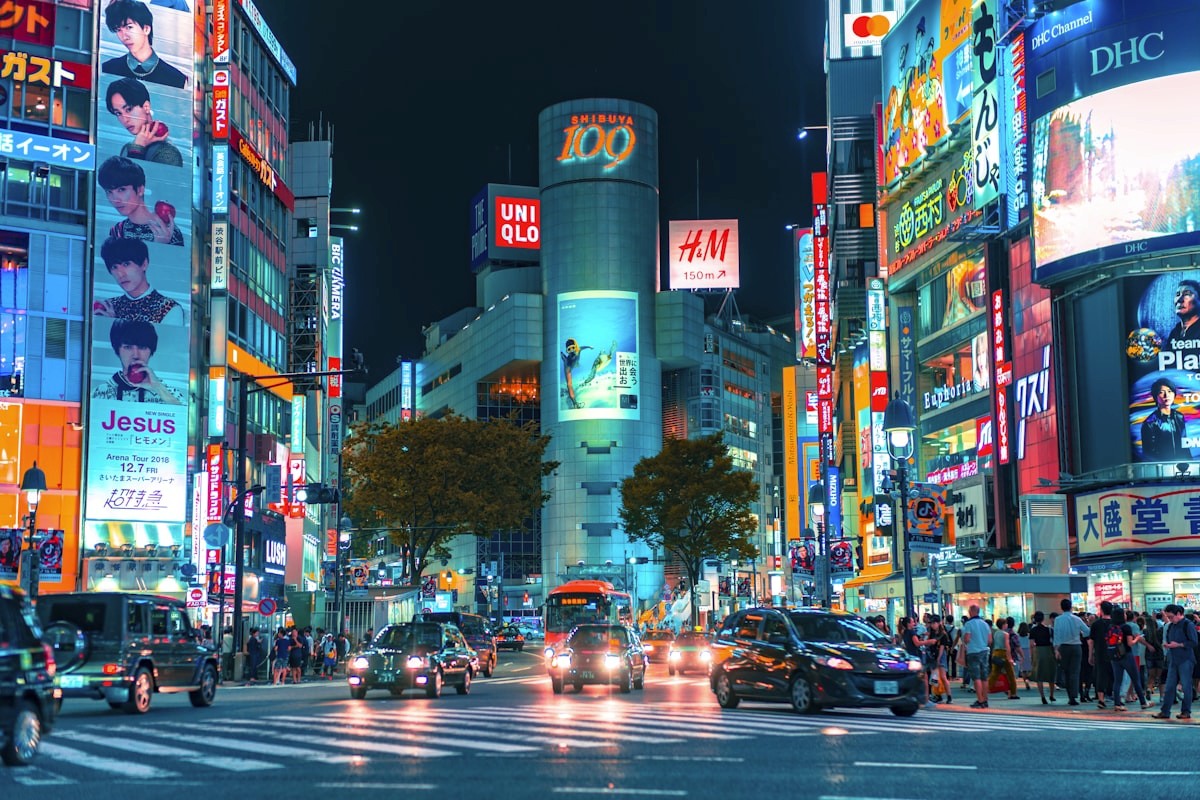
Shibuya's famous scramble crossing after dark. Photo by Dario Brönnimann on Unsplash
Most people underestimate Tokyo. Three days sounds like enough, but you'll wish you had five. Budget around $120-180/day here: Tokyo runs about 20-30% pricier than other Japanese cities for food and transport.
What to Do | Neighborhood | Budget | Mid-Range | Premium |
|---|---|---|---|---|
Temple and street food walk | Asakusa | $15-25 | $25-40 | $40-60 |
Vintage shopping and coffee | Shimokitazawa | $30-50 | $50-80 | $80-120 |
Nightlife and dining | Shinjuku/Shibuya | $40-80 | $80-130 | $130-200+ |
Anime and electronics | Akihabara | $20-60 | $60-100 | $100-200+ |
Upscale dining and parks | Roppongi/Marunouchi | $50-80 | $80-150 | $150-300+ |
Typical per-person daily spend by Tokyo neighborhood and travel style; estimates informed by Japan National Tourism Organization visitor-spending averages.
Pro tip: Base yourself near a stop on the JR Yamanote line (Shinjuku, Tokyo Station, or Ueno). The loop hits most of the city's major districts, so you waste less time and money on transfers.
Kyoto: Temples, Tea, and Fewer Crowds Than You Think
Kyoto is home to 17 UNESCO World Heritage Sites and over 2,000 temples and shrines, making it the densest concentration of cultural landmarks in Japan. Traditional tea houses and geisha districts in Gion still operate the way they did centuries ago.
The golden rule: go early. Fushimi Inari's famous 10,000 vermillion torii gates see 2.7 million visitors annually, according to the Kyoto Convention & Visitors Bureau. Show up at 6:30 AM and you'll practically have the trails to yourself. By 10 AM, you're in a queue.
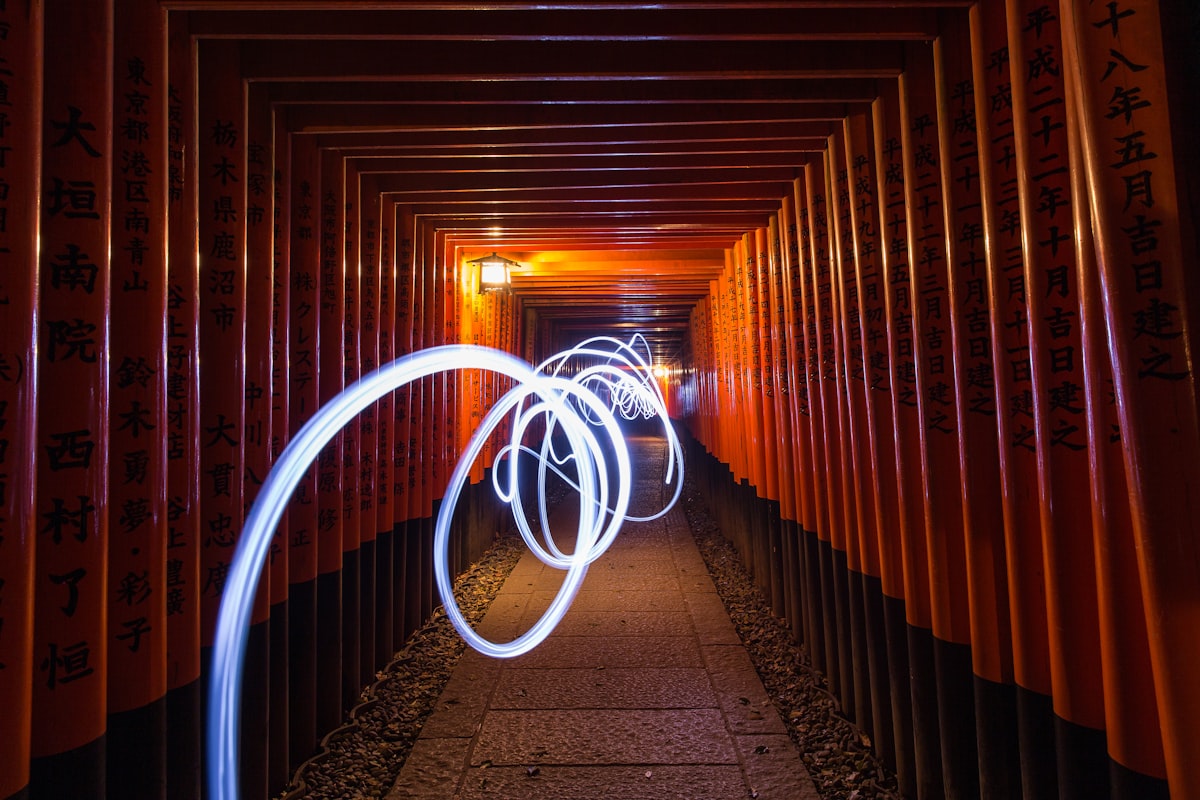
Fushimi Inari's torii gates in soft morning light. Photo by Matt Palmer on Unsplash
Arashiyama's bamboo grove is a 15-minute walk from the main train station there. Combine it with the Iwatayama Monkey Park (home to around 120 wild Japanese macaques on a hilltop) and you've got a full morning. Afternoons are better spent in Higashiyama, where narrow stone streets lead past pottery shops, matcha cafes, and Kiyomizu-dera temple, a 1,200-year-old wooden structure built without a single nail.
Kyoto is walkable and bikeable, which keeps transport costs low. Budget $80-120/day, roughly 30% less than Tokyo.
How to split your days across Kyoto's main areas
Area | Best For | Time Needed |
|---|---|---|
Fushimi Inari | Iconic torii gates, hiking (4 km trail to summit) | Half day (go early) |
Arashiyama | Bamboo grove, monkey park, river views | Half to full day |
Higashiyama | Temples, tea houses, shopping streets | Half to full day |
Gion | Geisha district, evening atmosphere | Evening |
Nishiki Market | Food tasting, souvenirs (130+ stalls over 5 blocks) | 2-3 hours |
Half days assume an early start; Fushimi Inari and Arashiyama fill up by mid-morning.
Osaka: Japan's Best Travel Place for Food Lovers
Osaka is widely recognized as Japan's culinary capital, with more than 14,000 restaurants in the central Chuo Ward alone. Street food here costs half of what you'd pay in Tokyo, and the portions are bigger. Dotonbori is the obvious starting point: a neon-lit canal strip lined with takoyaki (octopus balls at ¥500-800 per serving), okonomiyaki (savory pancakes), and kushikatsu (deep-fried skewers).
But the food scene goes deeper. Shinsekai is the working-class neighborhood with the best kushikatsu joints, many open since the 1950s. Kuromon Market (nicknamed "Osaka's Kitchen") is where chefs go to source ingredients at 7 AM, and tourists show up at 10 AM to eat standing at counters.

Dotonbori's neon glow over the canal at night. Photo by Jason Rost on Unsplash
Osaka is also the funniest city in Japan. Seriously. The comedy culture runs deep (Osaka is the birthplace of manzai, Japan's stand-up comedy tradition), and locals are noticeably more outgoing and playful compared to Tokyo or Kyoto. It makes the whole experience feel warmer.
Budget travelers can do Osaka on $70-100/day, making it the most affordable major city on this list.
Hiroshima: History That Changes You, Then Incredible Food
Hiroshima draws over 2 million visitors annually to its Peace Memorial Park, and most travelers who give it two or three days end up saying it was a trip highlight. The Peace Memorial Park and Museum are genuinely moving. Set aside at least 3 hours for the museum, which was fully renovated in 2019 to feature survivor testimonies alongside preserved artifacts. It's heavy, but it matters.
Then there's the food. Hiroshima-style okonomiyaki is layered (not mixed like Osaka's version) and loaded with noodles, cabbage, and pork. The Okonomimura building near Peace Park has four floors of competing okonomiyaki restaurants, 24 vendors in total. Pick any one on the third floor. You won't go wrong.
A day trip to Miyajima Island takes about an hour by ferry from Hiroshima Port. The floating torii gate of Itsukushima Shrine (a UNESCO World Heritage Site since 1996), wild deer, and the 535-meter Mt. Misen hike make it one of the most photogenic half-days in Japan. According to the Japan Tourism Agency, Miyajima consistently ranks among the top scenic spots nationwide.
Hakone and the Japanese Alps: Mountains Without the Effort
Not every Japan trip needs to be city-hopping. Hakone is 90 minutes from Tokyo by Odakyu Romance Car and puts you in hot spring territory with views of Mt. Fuji (3,776 meters, Japan's tallest peak) on clear days. The Hakone loop (cable car, pirate ship, ropeway) sounds touristy, but it's genuinely fun and covers a lot of ground.
For something more off the beaten path, Takayama in the Japanese Alps has preserved Edo-period streets dating to the 1600s, morning markets running since 1820, and some of the best beef in Japan. Hida beef rivals Kobe, costs roughly 30% less, and has shorter lines. Kanazawa, on the Sea of Japan coast, has the Kenroku-en garden (rated one of Japan's three most beautiful gardens since the Edo period), a stunning 21st Century Museum of Contemporary Art, and the Omicho Market that locals have used since 1721.
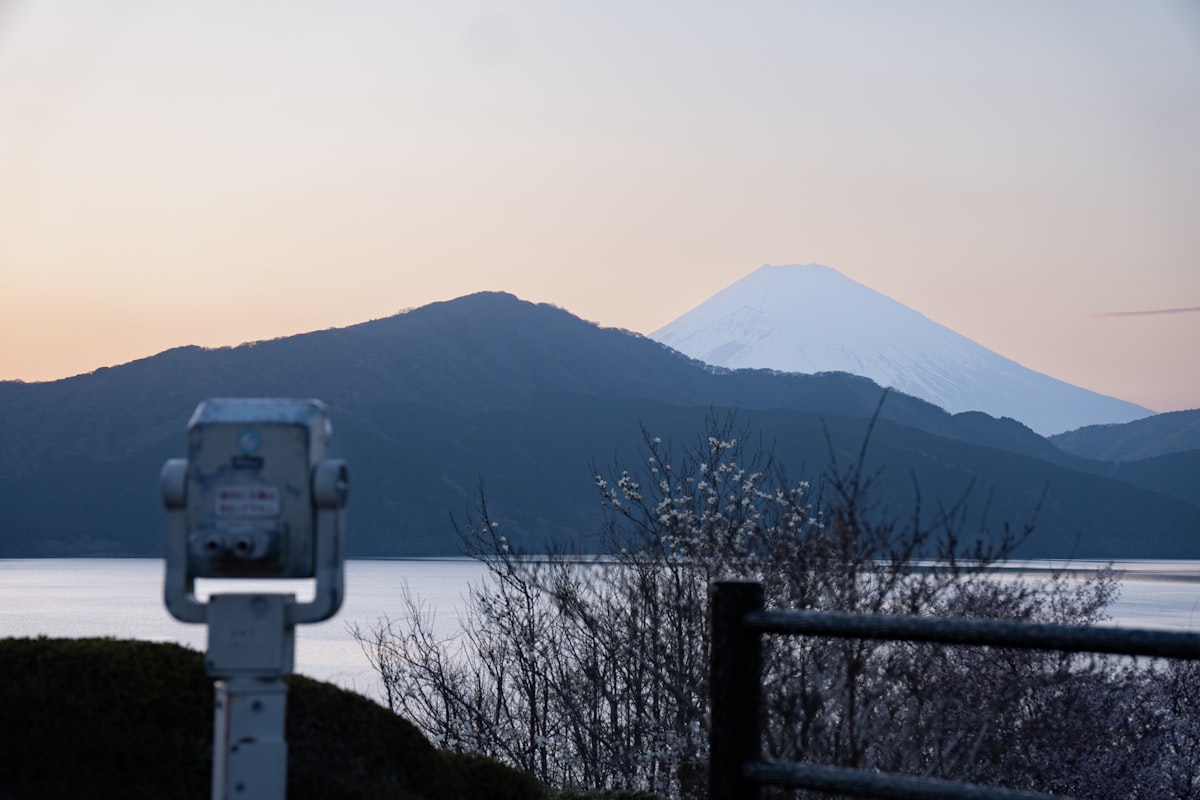
Mt. Fuji towering over Lake Ashi in Hakone. Photo by Marco Vockner on Unsplash
Day trips and multi-day escapes beyond the big three cities
Destination | Distance from Tokyo | Best For | Days Needed |
|---|---|---|---|
Hakone | 90 min by Odakyu Romance Car | Hot springs, Mt. Fuji views | 1-2 |
Takayama | 4 hours by train via Nagoya | Alps, Edo-period old town, Hida beef | 2-3 |
Kanazawa | 2.5 hours by Hokuriku Shinkansen | Gardens, contemporary art, seafood | 2-3 |
Nagano | 80 min by Hokuriku Shinkansen | Snow monkeys at Jigokudani, temples, soba | 1-2 |
All four are reachable from Tokyo by train; Hakone works even as an overnight.
What Japan Actually Costs
Japan's reputation as expensive is outdated, especially with the yen staying relatively weak against the dollar. The exchange rate was around ¥158 to the dollar in October 2026, per the Federal Reserve, well off the ¥110 range of the late 2010s in the Fed's historical rates, which means your dollars stretch over 40% further than they did back then.
Category | Budget | Mid-Range | Premium |
|---|---|---|---|
Accommodation/night | $30-60 (guesthouses) | $80-150 (business hotels) | $200-400+ (ryokan, luxury) |
Meals/day | $20-35 | $40-70 | $80-150+ |
Transport/day (local) | $5-10 | $10-20 | $20-40 (taxis) |
Experiences/day | $10-20 | $25-50 | $50-100+ |
Daily total | $65-125 | $155-290 | $350-690+ |
Typical daily costs per person by travel style. Source: Japan Tourism Agency visitor-expenditure survey, adjusted for recent exchange rates. Budget assumes guesthouses, convenience-store breakfasts, and local trains.
Budget travelers eating convenience store breakfasts and ramen lunches can keep food costs under $30/day without feeling deprived. 7-Eleven and Lawson in Japan carry fresh onigiri from ¥120 (about $0.80), bento boxes from ¥450 (about $3), and surprisingly good egg sandwiches. This is legitimately good food, not emergency snacks.
How to Plan Your Japan Trip
The single most useful thing you can do before arriving: map your intercity legs and decide whether a Japan Rail Pass fits your route. As of October 2026, the 14-day pass costs ¥80,000 (about $505) on the official JR Pass site, or ¥84,000 (about $530) through an overseas JR-designated agency. For reference, a single Tokyo-to-Kyoto bullet train ticket costs ¥13,970 (about $88) one way for a regular-season Nozomi reserved seat on JR's smartEX booking service, so the 14-day pass needs about six rides of that length to break even (the pass covers the Hikari on this route; the Nozomi needs a separate NOZOMI MIZUHO Ticket). If it fits, buy it before you fly: buying on the official site lets you reserve shinkansen seats online before you arrive, and you pick up the pass at a JR ticket office or designated ticket machine in Japan.
Flights from the US West Coast to Tokyo (LAX, SFO, SEA) run $500-800 round trip in shoulder season (April to May, September to November). Book 6-10 weeks ahead for the best fares. From the East Coast (JFK, EWR), expect $700-1,100.
Pro tip: Map your route before you buy the JR Pass. Individual tickets usually cost less for Tokyo-only trips and even for the classic Tokyo-Kyoto-Osaka loop; a 7-day pass tends to pay off only when you stack three or more long shinkansen legs inside a week, such as adding Hiroshima and returning to Tokyo.
Once you've picked your cities, you can map the whole route in one place. Describe your trip to Zoya, the AI travel companion inside Zenvoya's AI trip planner, and it builds an itinerary around your budget and travel style, booking flights, hotels, and experiences, so you skip the 30-tab research spiral.
Start Planning Your Japan Trip
Japan rewards planning, but it doesn't require perfection. Pick two or three cities, sort out your JR Pass math, and let the rest unfold. The best moments here tend to be the ones you didn't plan: a side-street izakaya, a festival you stumbled into, a shopkeeper who insists you try one more sample.
Start with the golden triangle (Tokyo, Kyoto, Osaka), add Hiroshima if you have the time, and save the mountain towns for a return trip. Decide on the JR Pass early, pick up a travel eSIM or pocket Wi-Fi before you go, and don't skip the convenience-store egg sandwiches. Trust us on that one. When you're ready to turn the shortlist into a real route, build it with Zenvoya's AI travel agent: tell it your dates, budget, and what you're into, and it maps a plan that actually makes sense.