
Beat the summer heat without a passport. The best cool-weather US destinations, why each stays cool, and typical summer temps.
Summer in a lot of the country now means a heat advisory and a power bill you don't want to open. So people are flipping the script. Instead of chasing the beach where it's 98F and humid, they're heading somewhere that actually feels like a break: the fog belt, the high country, the far north. That's the coolcation, and it's one of the fastest-rising travel searches heading into peak-heat season.
The good news is you don't need a passport to pull it off. The United States has entire regions that stay comfortable in July and August thanks to elevation, cold ocean currents, or a very large, very cold lake. Below are eight cool-weather summer destinations worth building a trip around, each with typical temps, the reason it stays cool, and a real recommendation. Heading abroad instead? See our companion guide to Europe's best coolcation destinations. And when you're ready to turn one of these into an itinerary, Zenvoya can help you map the whole thing.
Coolcation at a Glance
What's a coolcation? A coolcation is a summer trip planned around cooler weather instead of hot beaches. The idea: escape the heat by heading to high elevation, a cold-water coast, or a northern latitude where the peak of summer still tops out in the 60s or 70s.
Coolest of the bunch: Anchorage, Alaska and the Oregon Coast, where July highs often sit in the mid-to-upper 60s.
Best for mountain air: Breckenridge, Colorado and Lake Tahoe, cool days and genuinely cold nights.
Best surprise: San Francisco, where summer fog keeps the city cooler than most of California.
Watch for: Cool northern spots book up fast in July and August. Reserve lodging and any campsites (through recreation.gov) well ahead.
1. San Francisco Bay Area, California: The City That Skips Summer
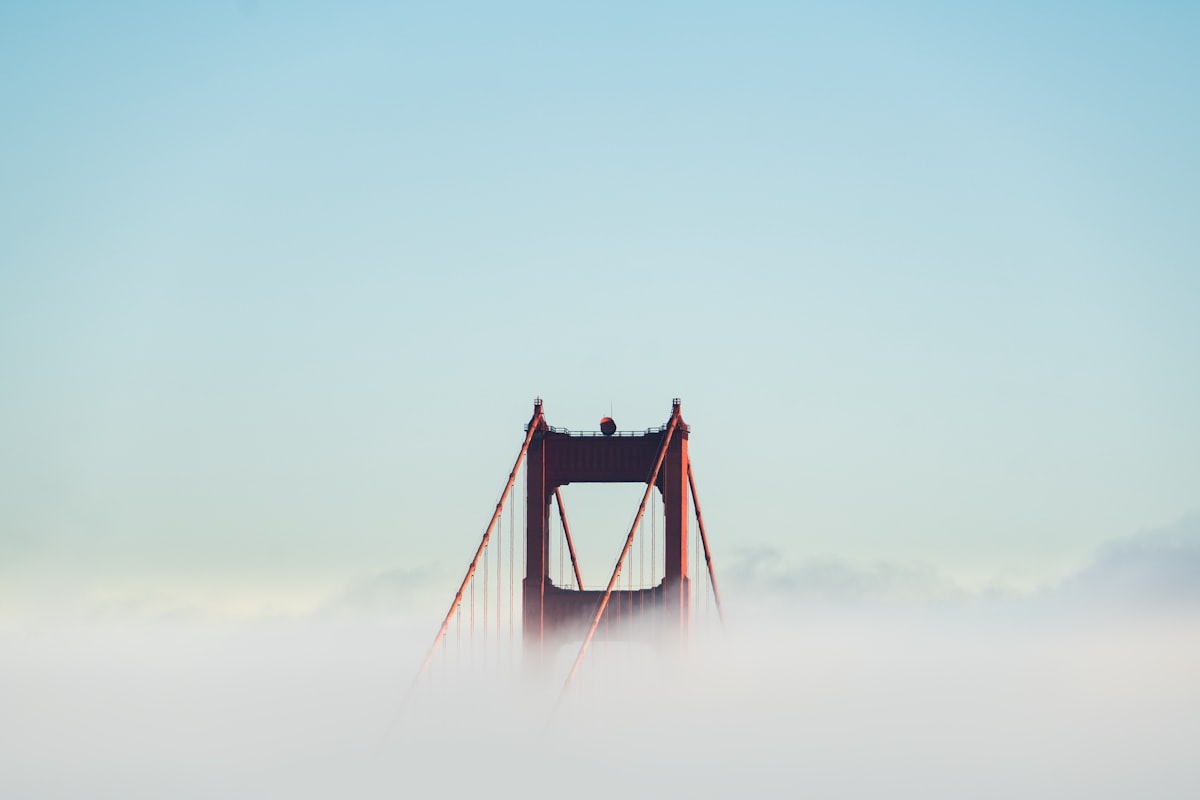
San Francisco's summer fog is a feature, not a bug. Photo by Joshua Sortino on Unsplash
Mark Twain never actually said the coldest winter he spent was a summer in San Francisco, but the joke stuck because it's basically true. While inland California bakes, San Francisco pulls a marine layer of fog off the cold Pacific and parks it over the city. Typical July highs run in the mid-to-upper 60s, per NOAA climate normals, and locals still carry a jacket in August.
Base yourself near Golden Gate Park, walk the coastal trail out to Lands End, and time a day trip inland to Napa or Berkeley if you actually want warmth. The fog usually burns off by early afternoon and rolls back in around dinner, so pack layers you can peel.
Pro tip: The fog is thickest in the mornings near the coast (Ocean Beach, the Presidio) and thinner in the eastern neighborhoods like the Mission, so plan sightseeing east-to-west as the day warms up.
2. The Oregon Coast: Evergreens, Sea Stacks, and 65-Degree Days
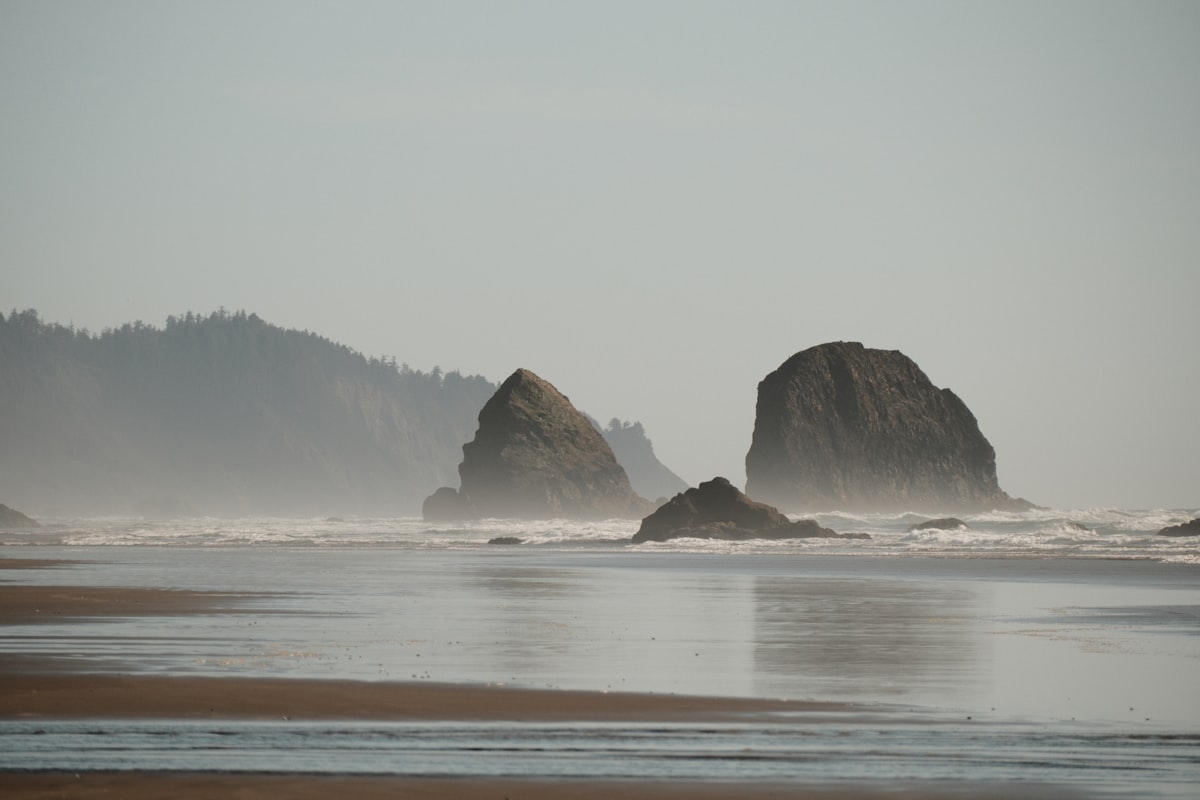
The Oregon coast stays cool and moody all summer. Photo by Jinsui Hu on Unsplash
The Oregon Coast is one of the most reliably cool places to spend an American summer. The same cold California Current that chills San Francisco runs the whole length of the coast, so towns like Cannon Beach, Astoria, and Newport see typical July highs in the mid-to-upper 60s according to NOAA climate normals. You'll want a fleece, not a swimsuit, and that's the point.
Drive Highway 101, stop at Haystack Rock at low tide, and eat your weight in Dungeness crab. This is prime road-trip country, so it's worth mapping the stops before you go. Travel Oregon has route ideas, and if you're camping the state parks, book early through recreation.gov because coastal sites fill months out.
3. Breckenridge and the Colorado Rockies: Mountain-Cool at 9,600 Feet

Summer green blankets the high Colorado Rockies. Photo by Mark Bosky on Unsplash
Elevation does what latitude does: the higher you go, the cooler it gets. Breckenridge sits above 9,600 feet, and typical summer highs hover around 70F with nights that can dip into the 40s, based on NOAA climate normals. You get long, bright days and the kind of crisp evening air that makes a campfire feel earned.
Ride the gondola up, hike the Blue River trails, and don't underestimate the altitude on day one. Drink more water than feels normal and ease into the big hikes. Nearby Rocky Mountain National Park is worth a day, and you can check entry rules and timed-entry reservations through the National Park Service before you drive up.
Pro tip: Afternoon thunderstorms are common in the Rockies in July and August. Start hikes early and aim to be below the tree line by early afternoon.
4. Acadia National Park and Bar Harbor, Maine: Cool Coast, Warm Lobster
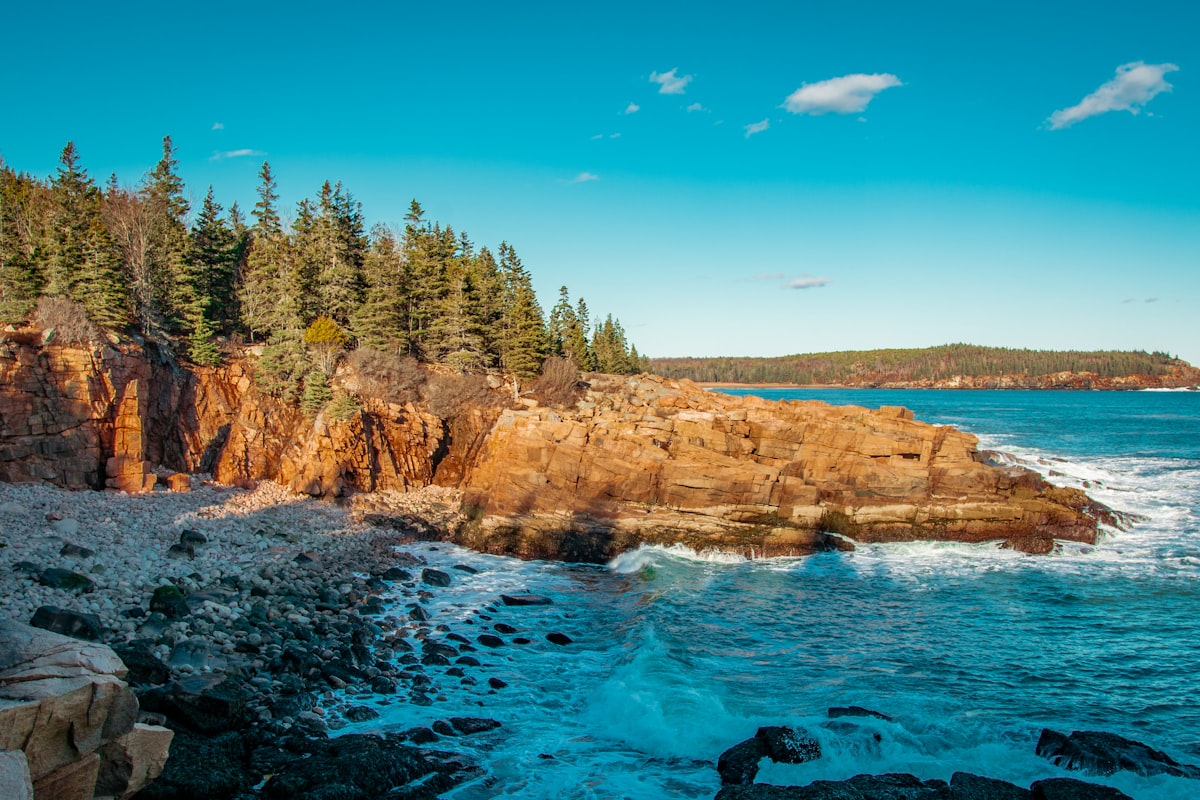
Acadia's pink granite meets the cold Atlantic. Photo by Trevor Hayes on Unsplash
Coastal Maine is the classic Northeast coolcation. Bar Harbor and Acadia National Park sit far enough north, right on the cold North Atlantic, that summer highs typically land in the mid-70s, per the National Park Service. Mornings can start downright chilly, which is exactly what you want when the rest of the East Coast is under a heat dome.
Catch sunrise from Cadillac Mountain (America's first look at the sunrise for part of the year), bike the carriage roads, and finish with a lobster roll in town. Cadillac Mountain summit requires a vehicle reservation in the busy season.
Pro tip: Book Cadillac Mountain sunrise vehicle reservations up to 90 days out through recreation.gov. They sell out fast, especially for the earliest slots.
5. Mackinac Island and Northern Michigan: The Great Lakes Air Conditioner
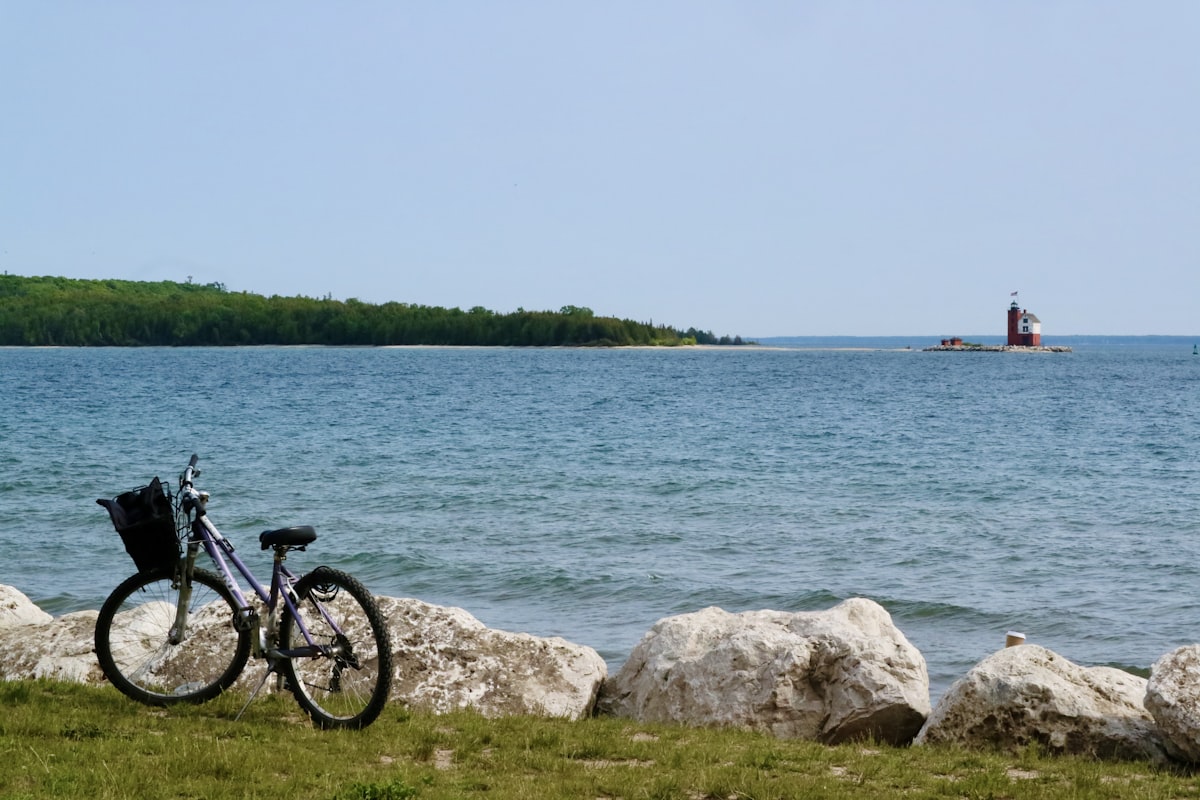
On Mackinac, you get around by bike, not car. Photo by Vincent Y @USA on Unsplash
Lake Superior and Lake Michigan hold onto winter's cold well into summer, and that giant cold-water mass keeps the shoreline noticeably cooler than the interior. On Mackinac Island, typical summer highs sit in the mid-to-upper 70s, per NOAA climate normals, and the lake breeze does the rest.
Mackinac bans cars, so you get around by bike, on foot, or by horse-drawn carriage, which makes the whole place feel like a step back in time. Ferry over from Mackinaw City, ride the 8-mile loop around the island, and yes, buy the fudge. Pure Michigan has ferry and lodging details for the wider Great Lakes region if you want to string together Traverse City or the Upper Peninsula.
6. Anchorage and Southcentral Alaska: The Land of the Cool Midnight Sun

Alaska trades heat for endless summer daylight. Photo by Vadym Shashkov on Unsplash
If you want to genuinely forget that it's summer everywhere else, go north. Anchorage sees typical July highs in the mid-60s, per NOAA climate normals, with daylight stretching close to 19 hours around the solstice. Cool temperatures plus endless light is a strange and wonderful combination: you can hike at 9 PM and still see fine.
Use Anchorage as a base for day trips to Kenai Fjords, the Chugach mountains, and the drive down to Seward. Visit Anchorage covers wildlife tours and glacier trips. This is a big, logistics-heavy destination, so it pays to plan the routing carefully before you land.
7. Flagstaff, Arizona: The 7,000-Foot Escape From the Desert
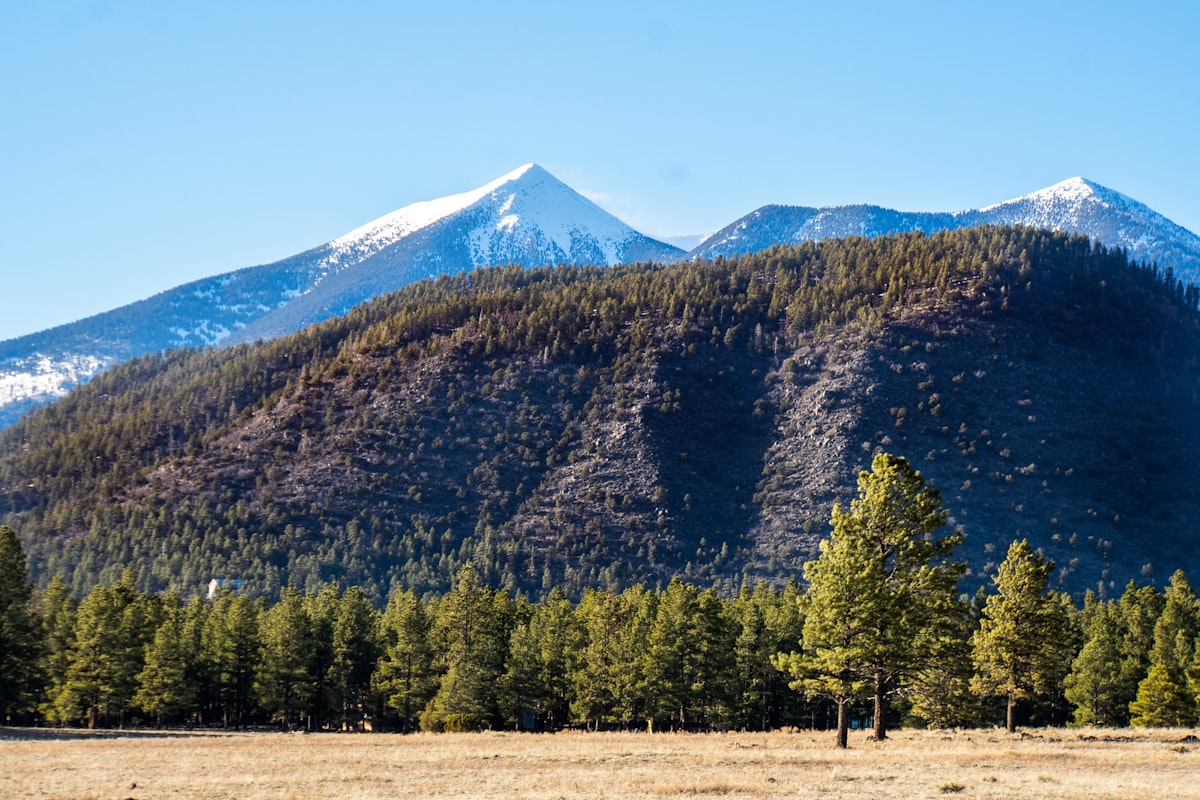
Flagstaff sits 7,000 feet above the desert heat. Photo by Lauren Finch on Unsplash
Here's the one that surprises people. While Phoenix regularly hits 105F and up, Flagstaff sits at about 7,000 feet in the pines, and typical summer highs land in the low 80s with nights that cool into the 50s, per NOAA climate normals. It's the same state, roughly 40 degrees cooler at the peak of the day.
Flagstaff makes a great base for the Grand Canyon's South Rim (about 90 minutes north), plus Walnut Canyon and the San Francisco Peaks right in town. Discover Flagstaff has trail and stargazing info; the city is a certified International Dark Sky Place, so bring something to look up with.
Pro tip: Northern Arizona gets a summer monsoon, with sharp afternoon storms from roughly July into September. It cools things down beautifully but plan outdoor time for the morning.
8. Lake Tahoe, California and Nevada: Alpine Lake, Cold Nights
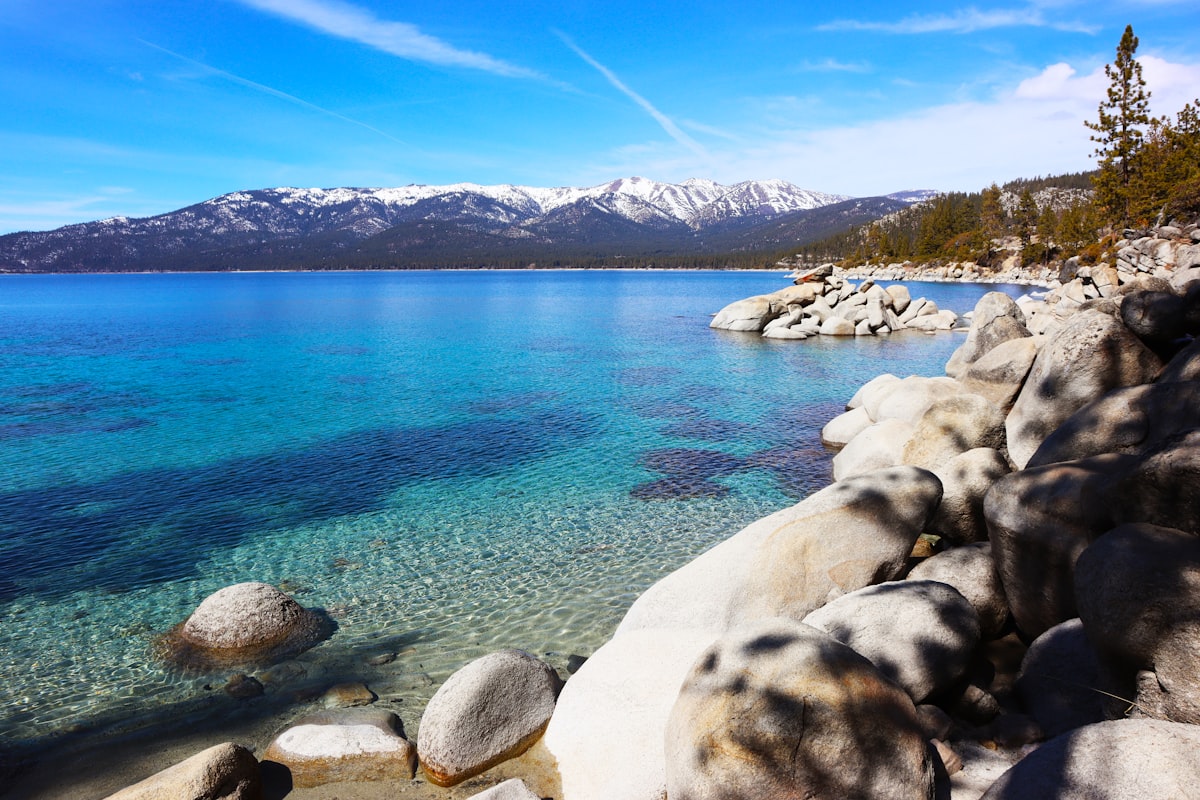
Lake Tahoe stays crystal clear and cold all summer. Photo by Peter Hulce on Unsplash
Straddling the California-Nevada line at about 6,200 feet, Lake Tahoe gives you warm-enough days and genuinely cold nights. Typical summer highs run from the high 70s to around 80F, and nighttime lows can drop into the 40s, per NOAA climate normals. The lake itself stays bracingly cold all summer, which keeps the whole basin comfortable.
Paddle Emerald Bay in the morning, hike a stretch of the Tahoe Rim Trail, and grab a lakeside dinner as the temperature drops. Visit Lake Tahoe has beach and trail rundowns for both the California and Nevada shores.
Coolcation USA: Quick Comparison
Destination | Typical Summer High | Why It Stays Cool |
|---|---|---|
San Francisco Bay Area, CA | Mid-to-upper 60s F | Cold Pacific current and marine-layer fog |
Oregon Coast, OR | Mid-to-upper 60s F | Same cold California Current along the coast |
Breckenridge, CO | Around 70F | High elevation (9,600+ feet) |
Acadia / Bar Harbor, ME | Mid-70s F | Northern latitude on the cold North Atlantic |
Mackinac Island, MI | Mid-to-upper 70s F | Cold Great Lakes water and lake breeze |
Anchorage, AK | Mid-60s F | Far-north latitude |
Flagstaff, AZ | Low 80s F | High elevation (about 7,000 feet) |
Lake Tahoe, CA/NV | High 70s to around 80F | Alpine elevation (about 6,200 feet) |
Typical July highs based on NOAA / NCEI 1991-2020 U.S. climate normals and National Park Service weather pages. Actual conditions vary year to year.
How We Chose These
We prioritized places where the cool weather is structural, not a fluke: high elevation, cold ocean currents, cold-water Great Lakes shorelines, or a far-north latitude. For each, we pulled typical July high temperatures from NOAA / NCEI climate normals and the National Park Service, then weighted for how easy the destination is to reach and build a full trip around. Temperatures are typical averages, so pack layers and check the forecast close to your dates; a heat wave can reach even the cool spots.
Ready to Plan Your Coolcation?
Picking the destination is the easy part. The real work is stitching together flights, a place to stay, and the day-to-day so you actually beat the heat instead of chasing it. Tell Zenvoya's personal travel concierge what you're after (say, "somewhere in the mid-60s in July, near hiking, flying out of Chicago") and it plans the trip around your dates, your budget, and the weather you're chasing. If a coolcation involves a road trip or a national park stay, Zenvoya can map the route and time your stops around campsite or park reservations you book separately.
The Bottom Line
If summer at home has turned into an endurance test, a coolcation is the fix, and you don't have to go far to find one. Anchorage and the Oregon Coast are the surest bets for genuinely cool days, while Breckenridge, Lake Tahoe, and Flagstaff trade a few degrees for mountain scenery and cold, campfire-worthy nights. Pick the reason it stays cool (elevation, a cold coast, a northern latitude) and build the trip around it. When you're ready to make it real, map the whole route with Zenvoya's AI travel agent and spend your summer somewhere that actually feels like a break.