Plan your Vietnam trip with detailed 10-day and 2-week itineraries running north to south from Hanoi to Ho Chi Minh City, with budget breakdowns, transport options, and daily plans for 2026.
Most people underestimate Vietnam. They think of Ha Long Bay, maybe a bowl of pho, and stop there. But this is a country that stretches over 1,650 km from north to south, covers three distinct climate zones, and costs a fraction of what you'd spend in Thailand or Bali. The catch? You actually need a Vietnam travel itinerary. Winging it works in some countries. Vietnam rewards structure.
These itinerary options run north to south, from Hanoi to Ho Chi Minh City, which is the most logical flow for first-timers. Ten days gets you the essentials without feeling rushed. Two weeks lets you add the central highlands, extra beach time, or a slower pace through the Mekong Delta. Both plans assume moderate spending ($50-120/day excluding flights) and mix city days with countryside detours.
Zenvoya pulled together the routing, costs, and logistics here based on 2026 pricing and updated domestic flight schedules.
Vietnam at a Glance (2026)
Best time to visit: November to early December is the best window for a full north-to-south trip, with favorable weather across all three regions. March to May is a strong shoulder season alternative with lower prices.
Budget: $35-55/day budget, $60-120/day mid-range, $150-250/day comfort (excluding international flights)
Visa: US citizens get 90-day e-visa ($25, processed in 3 business days). Apply at Vietnam Immigration Portal.
Currency: Vietnamese Dong (VND). Spring 2026 rate: ~25,500 VND to $1.
Getting around: Domestic flights ($30-80 one way), overnight trains ($20-45 for a soft sleeper), Grab (Vietnam's Uber) for city transit.
Language: Vietnamese. English is common in tourist areas, limited in rural zones. Download Google Translate offline packs before you go.
Tourism stats: Vietnam welcomed over 17.5 million international visitors in 2025, according to the Vietnam National Administration of Tourism. US visitors ranked among the top 10 source markets.
Which Vietnam Itinerary Length Is Right for You?
A 10-day Vietnam itinerary covers Hanoi, Ha Long Bay, Hoi An, and Ho Chi Minh City with two domestic flights. A 14-day trip adds Hue, the Hai Van Pass, and the Mekong Delta for a more complete experience at a relaxed pace.
Ten days is tight but doable if you fly between Hanoi and Da Nang (or Hue) to save transit time. Two weeks is the sweet spot for most travelers, giving you time to eat slowly, miss a bus, and not stress about it. Here's how they compare.
| 10 Days | 14 Days |
|---|---|---|
Cities | Hanoi, Ha Long Bay, Hoi An, Ho Chi Minh City | + Hue, Da Lat or Phong Nha, Mekong Delta |
Pace | Efficient. One major thing per day, domestic flights between regions. | Comfortable. Room for half-day downtime and spontaneous detours. |
Best for | First-timers with limited PTO, couples | Slow travelers, families, anyone wanting depth over breadth |
Internal flights | 2 (Hanoi to Da Nang, Da Nang to HCMC) | 1-2 (Hanoi to Hue or Da Nang, optional Da Lat to HCMC) |
Train rides | 0-1 (optional Ha Long Bay to Hanoi) | 2-3 (Hue to Hoi An, overnight Hanoi to Hue) |
Estimated cost | $700-1,400 per person | $1,000-2,100 per person |
Costs exclude international flights. Based on mid-range spending: 3-star hotels, sit-down meals, domestic transport, and 1-2 activities per day.
The 10-Day Vietnam Travel Itinerary
This route covers four main stops: Hanoi (3 days, including Ha Long Bay), Hoi An (3 days), and Ho Chi Minh City (3 days), with a travel day built in. It moves north to south, following the coast.
Days 1-3: Hanoi
Day 1: Old Quarter and Street Food
You'll land at Noi Bai International Airport (HAN), 25 km north of central Hanoi. A Grab to the Old Quarter takes 40-50 minutes and costs 250,000-350,000 VND ($10-14). Official airport taxis charge a flat 350,000-400,000 VND. A public bus (Route 86) is also available for 45,000 VND (~$1.75), but routes can be hard to navigate with luggage.
Check into your hotel, drop your bags, and head out on foot. The Old Quarter is one of the most walkable neighborhoods in Southeast Asia, and the best way to experience it is at street level. Hanoi's Old Quarter is a grid of 36 streets, each historically named after the goods sold there (Silk Street, Silver Street, Paper Street). Start on Hang Bac and just wander. The first rule of Hanoi: look down. The sidewalks are an obstacle course of motorbikes, plastic stools, and food vendors.
Lunch: Bun cha. It's Hanoi's signature dish and the one Obama ate with Anthony Bourdain in 2016. Bun Cha Huong Lien (24 Le Van Huu) is that exact restaurant. Expect 40,000-60,000 VND ($1.60-2.35) per serving. The char-grilled pork patties come with rice noodles and a dipping broth. Get the spring rolls on the side.
Afternoon: Hoan Kiem Lake. Walk the perimeter (takes about 30 minutes), cross the red Huc Bridge to Ngoc Son Temple (30,000 VND, ~$1.20), and watch the tai chi groups if you're there before 8 AM. The lake is the emotional center of Hanoi. Every local has a memory tied to it.
Evening: Bia hoi corner. Intersection of Ta Hien and Luong Ngoc Quyen. This is where locals drink fresh draft beer for 5,000-10,000 VND ($0.20-0.40) a glass. Sit on one of the tiny plastic stools, order a plate of peanuts, and people-watch. Weekend nights get crowded after 8 PM.
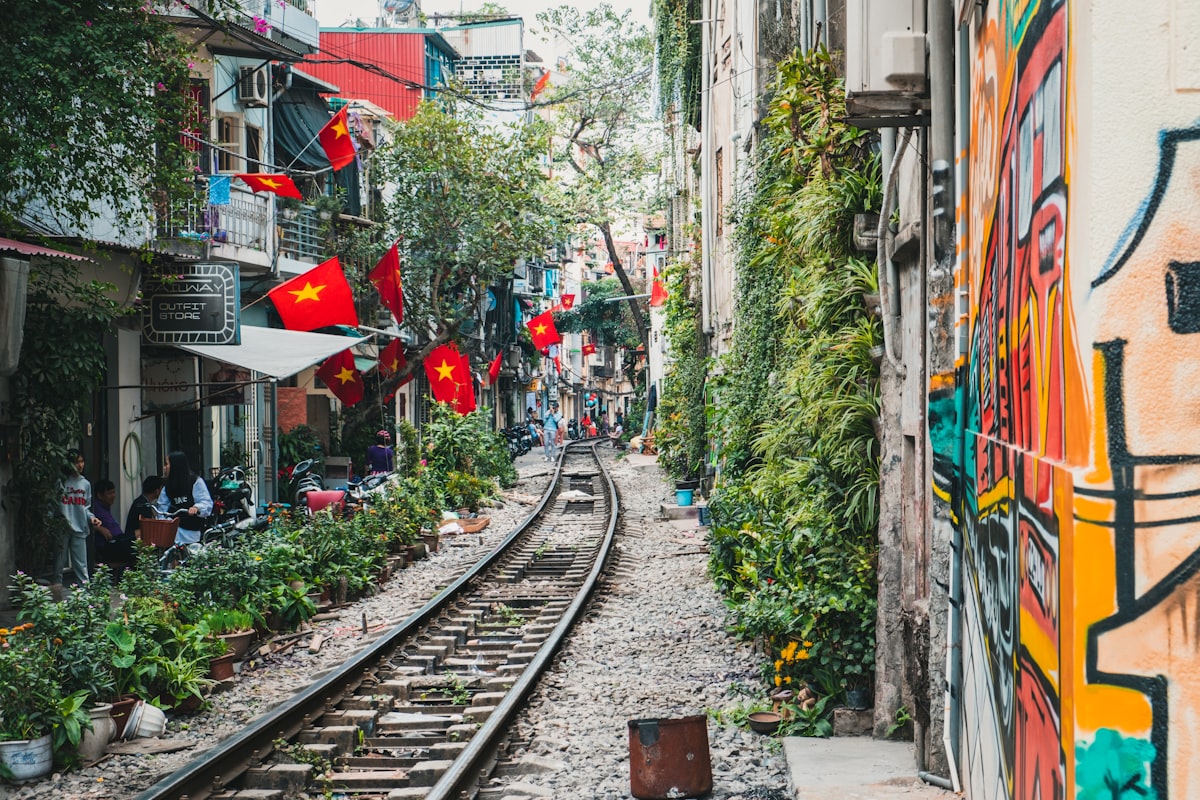
Railway tracks run between homes and cafes in Hanoi's Train Street. Photo by Howen on Unsplash
Day 2: History and Culture
Morning: Ho Chi Minh Mausoleum complex (free, but dress modestly: no shorts or tank tops, cameras not allowed inside the mausoleum). The line moves fast. Afterward, walk through the Presidential Palace grounds and the stilt house where Ho Chi Minh lived. The whole complex takes 2-3 hours.
Midday: Vietnamese Women's Museum (40,000 VND, ~$1.60). Three floors covering women's roles in Vietnamese history, from war to daily life. It's one of the best-curated museums in Southeast Asia and rarely crowded.
Afternoon: Train Street. A narrow residential alley where a real freight train passes through twice daily (3:30 PM and 7:30 PM, schedules shift). Cafes line both sides, and everyone pulls their chairs in when the horn blows. Get there 30 minutes early for a seat. Note: local authorities occasionally shut down access for safety, so check the day of.
Dinner: Pho Thin, 13 Lo Duc Street. The pho here uses stir-fried beef instead of the traditional simmered slices. It's controversial among pho purists and absolutely worth trying. A bowl costs 50,000 VND (~$2).
Day 3: Ha Long Bay (Overnight or Day Trip)
Ha Long Bay is 170 km east of Hanoi. You have two options:
| Day Trip | Overnight Cruise |
|---|---|---|
Duration | 12 hours (4 hours driving each way) | 24-36 hours |
Cost | $40-80 per person | $100-250 per person |
What you see | Main bay, 1-2 caves, lunch on boat | Bai Tu Long area, kayaking, caves, sunrise, squid fishing |
Worth it? | If you're short on time | Yes, this is the right way to do it |
Overnight cruises include meals, kayaking, and cave visits. Day trips include lunch and one cave stop.
Book through a reputable operator, not the cheapest option on the street. Indochina Junk, Bhaya Cruises, and Heritage Line are consistently well-reviewed. Most overnight cruises include meals, kayaking, cave visits, and onboard activities.
The limestone karsts rising from emerald water are every bit as dramatic as the photos suggest. Over 1,600 islands and islets spread across the bay, covering roughly 1,553 km2. UNESCO designated Ha Long Bay a World Heritage Site in 1994 and extended the listing in 2000 for its geological significance. About 4 million tourists visit annually.
Pro tip: Bai Tu Long Bay (northeast of Ha Long) has the same geography with a fraction of the boat traffic. Some operators specifically route through Bai Tu Long. Ask when booking.
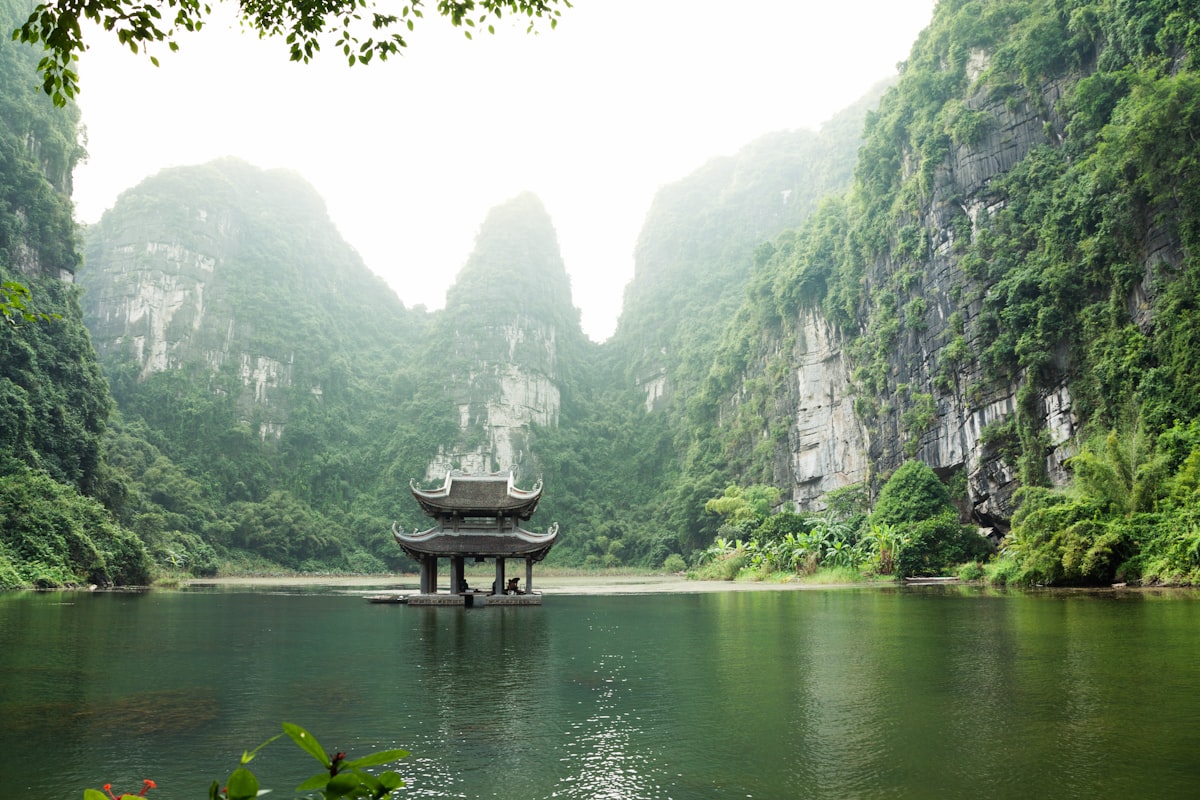
Limestone karsts and a pagoda in northern Vietnam. Photo by Quang Nguyen Vinh on Unsplash
Day 4: Fly to Da Nang, Head to Hoi An
Flight from Hanoi (HAN) to Da Nang (DAD): 1 hour 20 minutes, $30-60 on VietJet or Bamboo Airways. Book 2-3 weeks ahead for the best prices.
Da Nang airport to Hoi An is 30 km south (40 minutes by Grab, ~150,000 VND/$6). Don't stay in Da Nang unless you want beach resort vibes. Hoi An is where the magic is.
Days 5-6: Hoi An
Day 5: Ancient Town and Food
Hoi An's Ancient Town is a UNESCO World Heritage Site inscribed in 1999 with 800+ historic buildings spanning the 15th through 19th centuries. An Old Town ticket (120,000 VND, ~$4.70) gets you into 5 heritage sites. Must-sees: Japanese Covered Bridge (over 400 years old), Tan Ky Ancient House, and Phuc Kien Assembly Hall.
But honestly, the best thing about Hoi An is just walking through it. Yellow buildings draped in bougainvillea, tailors on every corner, lanterns strung across the streets. It's tourist-heavy, sure. It's also genuinely beautiful.
Lunch: Cao lau. It's a noodle dish unique to Hoi An, made with water from a specific local well (Ba Le Well) and lye from Cham Island ash. The thick rice noodles, pork slices, and crispy rice paper croutons are nothing like anything else in Vietnam. Try it at Cao Lau Thanh (26 Thai Phien), 35,000-45,000 VND ($1.40-1.75).
Afternoon: Get something tailored. Hoi An has over 400 tailor shops, and you can get a custom suit, dress, or ao dai in 24-48 hours. Yaly Couture and BeBe are the most-recommended, but smaller shops off the main drag offer comparable quality at lower prices. A custom-made suit starts around $80-150, a dress $30-60.
Evening: Hoi An Night Market (Nguyen Hoang Street, An Hoi Island). Opens at 5 PM. Lanterns, street food, silk goods, and a riverside setting. The banh mi stalls here compete with Banh Mi Phuong (2B Phan Chu Trinh), which Anthony Bourdain called the best sandwich in the world.
Day 6: Beach Day or Countryside
Two options based on your energy:
Option A: An Bang Beach. 4 km from Ancient Town (10-minute bike ride, most hotels provide free bikes). It's a long, clean stretch of sand with beachfront restaurants and sun loungers ($3-5 for the day). The water is warm enough to swim from April through September.
Option B: Countryside bike ride. Rent a bicycle (30,000-50,000 VND/day) and ride through Tra Que Vegetable Village, where farmers use centuries-old organic methods. Some offer cooking classes ($25-35 per person, 3 hours) where you harvest ingredients and cook a full Vietnamese meal. It's the kind of activity that sounds cheesy until you're eating spring rolls you rolled yourself next to a rice paddy.
Days 7-9: Ho Chi Minh City
Getting there: Flight from Da Nang (DAD) to Tan Son Nhat Airport (SGN) in Ho Chi Minh City: 1 hour 20 minutes, $35-70.
Day 7: District 1 and War History
Start at the War Remnants Museum (40,000 VND, ~$1.60). It's one-sided in its perspective, but the photography exhibits and Agent Orange documentation are devastating and important. Plan 2-3 hours. Go in the morning when it's less crowded.
Walk to Notre-Dame Cathedral Basilica (under renovation until 2027, but the exterior is still worth seeing) and the Central Post Office (designed by Gustave Eiffel's firm in the 1880s, still a working post office). They're across the street from each other.
Afternoon: Ben Thanh Market. It's loud, chaotic, and heavily touristed, but the food stalls in the back are legitimate. Negotiate everything by at least 50%. If haggling stresses you out, visit the night market instead (opens 6 PM outside the main building) where prices are more fixed.
Dinner: Head to Bui Vien Walking Street in District 1 for the backpacker energy, or go to District 4 for better food at local prices. Quan Ut Ut (168 Vo Van Kiet) does Vietnamese-American BBQ ribs that are wildly good and cost about 200,000-300,000 VND ($8-12) per person with drinks.
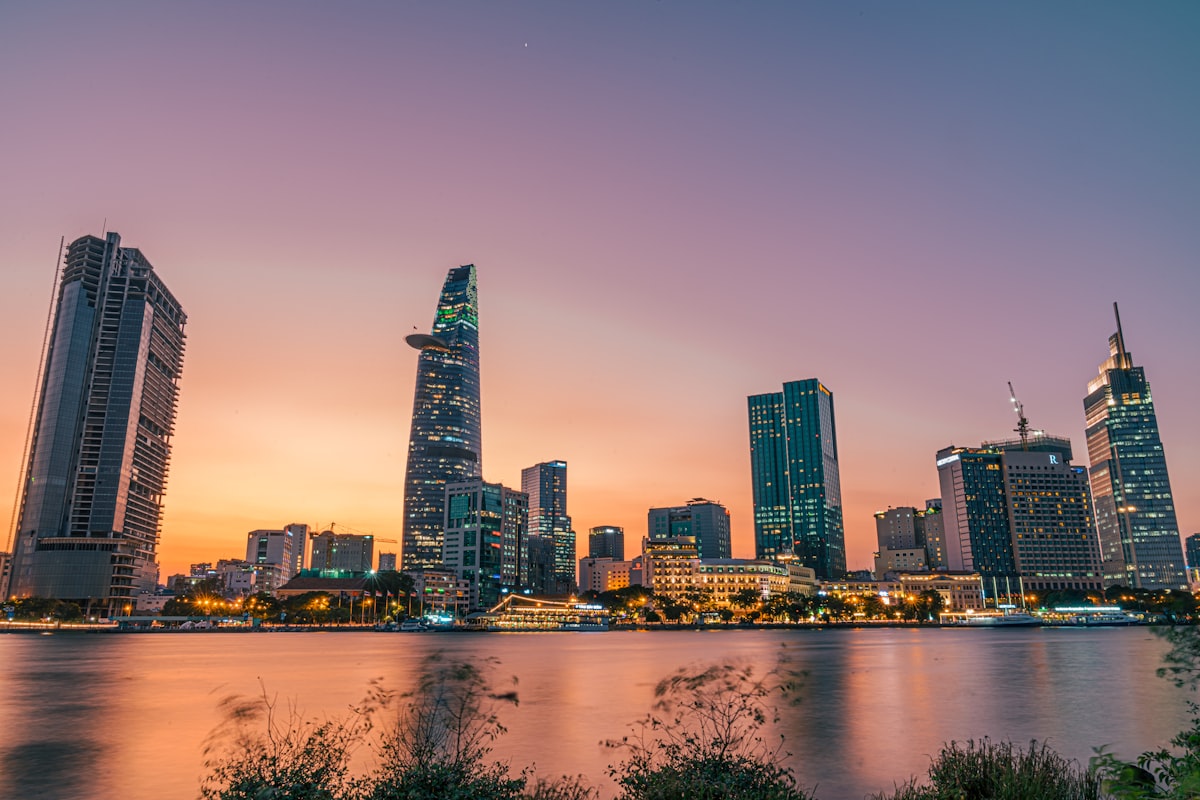
Saigon's skyline glows at golden hour over the river. Photo by Cuvii on Unsplash
Day 8: Cu Chi Tunnels and Cholon
Morning: Cu Chi Tunnels, 70 km northwest of HCMC. Book a half-day tour ($15-30 including transport) or take a public bus ($1) to Cu Chi town and a motorbike taxi the rest. The tunnel network stretches 250 km and was built over 20 years. You'll crawl through a section widened for tourists (the original tunnels were barely wide enough for a Vietnamese soldier). It's claustrophobic and fascinating.
Afternoon: Cholon (District 5), HCMC's Chinatown. Thien Hau Temple is the standout, a 200-year-old Chinese temple with incredible ceramic roof dragons. Binh Tay Market nearby is the wholesale version of Ben Thanh, less tourist-oriented and more interesting for it. Street food in Cholon is exceptional; try banh canh cua (crab noodle soup, 50,000-70,000 VND) from any stall with a crowd.
Day 9: Saigon at Your Pace
This is your flex day. Options:
Mekong Delta day trip: Boats through floating markets, coconut candy workshops, fruit orchards. Most tours hit Cai Be or Ben Tre (~$25-40, full day). Worth it if you're not extending to 2 weeks.
Coffee culture deep dive: Vietnam is the world's second-largest coffee producer, exporting over 1.5 million metric tons annually. Try ca phe sua da (iced milk coffee) at The Workshop (27 Ngo Duc Ke), egg coffee at Cong Ca Phe, and then visit a specialty roaster like Shin Coffee for single-origin pours. You can hit all three in one afternoon.
War history continued: Reunification Palace (40,000 VND), where the Vietnam War ended on April 30, 1975 when a North Vietnamese tank crashed through the gates. The palace interiors are frozen in time.
Day 10: Departure
Tan Son Nhat Airport (SGN) is 7 km from District 1 (20-40 minutes by Grab depending on traffic, 100,000-150,000 VND). Traffic in HCMC is genuinely terrible during rush hours (7-9 AM, 5-7 PM). Leave 90 minutes for airport transfer during peak times.
If your flight is in the evening, use the morning for last-minute shopping. Dong Khoi Street in District 1 has higher-end Vietnamese crafts, lacquerware, and silk. The Saigon Centre mall has air conditioning and a food court if you just need to kill time comfortably. For a final coffee, Cafe Apartment at 42 Nguyen Hue is a repurposed apartment building where every unit is a different cafe. Take the elevator to the top floor and work your way down.
Vietnam 2 Week Itinerary: How to Extend Your Trip
Adding four days transforms the 10-day plan into a 14-day Vietnam itinerary with deeper cultural experiences in central Vietnam and a proper Mekong Delta visit. Take the 10-day plan above and insert these additions.
Day 4 (Added): Hue
Instead of flying direct to Da Nang, fly to Phu Bai International Airport (HUI) in Hue, or take the overnight train from Hanoi ($25-40 for a soft sleeper, 13 hours, departing 7 PM and arriving 8 AM).
Morning: Imperial Citadel (200,000 VND, ~$8), the seat of the Nguyen dynasty from 1802-1945. It's a sprawling complex of palaces, temples, and gates modeled after Beijing's Forbidden City. The Complex of Hue Monuments was inscribed as a UNESCO World Heritage Site in 1993. The Purple Forbidden City inside was largely destroyed during the 1968 Tet Offensive, but restoration is ongoing and the remaining halls are impressive.
Afternoon: Thien Mu Pagoda (free), the tallest religious building in Vietnam at 21 meters, perched on a hill overlooking the Perfume River. Then take a dragon boat cruise on the Perfume River ($5-10 per person for a shared 2-hour cruise). The riverbanks are lined with temples, and the light at sunset turns the water golden.
Dinner: Bun bo Hue. This is the city's signature dish, a spicy beef and pork noodle soup with lemongrass. It's punchier than pho and less well-known outside Vietnam. Try it at Bun Bo Hue O Phuong (7 Nguyen Tri Phuong), 30,000-40,000 VND ($1.20-1.60).
Day 5 (Added): Hanoi to Ho Chi Minh Itinerary Highlight, the Hai Van Pass
Rent a motorbike and ride the Hai Van Pass ($10-15/day for a scooter), the 21-km coastal mountain road that peaks at 496 meters elevation. The pass crosses a mountain between Hue and Da Nang with ocean views on both sides. Total ride to Hoi An: 4-5 hours with stops.
If you'd rather not ride, book a private car through Hai Van Pass ($40-60 one way). Alternatively, the train from Hue to Da Nang (2.5 hours, $5-10) runs along the coast with windows you can actually open.
Days 11-12 (Added): Mekong Delta
From HCMC, take a bus to Can Tho (3.5 hours, 150,000-200,000 VND/$6-8). Can Tho is the largest city in the Mekong Delta region with a population of about 1.2 million.
Day 11: Cai Rang Floating Market. Get there by 5:30-6 AM when it's busiest. Farmers sell directly from their boats, hanging samples of their goods on tall poles so buyers can see what's available from a distance. The market has operated this way for over a century. Rent a small boat ($10-15 for 2-3 hours) and cruise through. Afterward, explore the canals and stop at a coconut candy workshop.
Day 12: Rent bicycles and ride through the orchards and villages around Can Tho. The Mekong Delta produces over 50% of Vietnam's rice output and nearly all its tropical fruit. Stop at fruit gardens where you can taste rambutan, mangosteen, and dragon fruit straight off the tree ($2-3 entry with tastings). Return to HCMC by afternoon bus.
Days 13-14: Ho Chi Minh City (Extended)
With the extra time, you can explore beyond District 1. Day 13: Head to District 2 (Thu Duc City) for The Factory Contemporary Arts Centre, one of Vietnam's best independent art spaces. Lunch at the cluster of restaurants along Thao Dien Street. Then visit the Jade Emperor Pagoda in District 3, built in 1909 and filled with intricate wood carvings, ceramic figurines, and incense smoke so thick you can taste it.
Day 14: Sleep in. Get one final banh mi from Banh Mi Huynh Hoa (26 Le Thi Rieng), widely considered HCMC's best. The line wraps around the block by 4 PM, but it moves fast. Then head to the airport for your flight home.
Vietnam Travel Budget: What Does It Actually Cost?
Vietnam is one of the most affordable countries in Southeast Asia for travelers in 2026. Budget travelers spend $35-55/day, mid-range runs $60-120/day, and comfort-level travel costs $150-250/day, all excluding international flights.
Category | Budget ($35-55/day) | Mid-Range ($60-120/day) | Comfort ($150-250/day) |
|---|---|---|---|
Accommodation | Guesthouse/budget hotel ($10-20) | 3-star hotel ($30-60) | 4-5 star hotel ($80-150) |
Food | Street food + local restaurants ($8-15) | Mix of local + sit-down ($15-30) | Upscale restaurants ($30-60) |
Transport | Buses, trains, Grab ($5-10) | Domestic flights, private cars ($15-30) | Flights, private transfers ($30-60) |
Activities | Free/cheap sites ($2-5) | Guided tours, cooking classes ($10-25) | Private tours, premium experiences ($40-80) |
Misc | SIM card, water, tips ($2-5) | Souvenirs, coffee, tips ($5-10) | Tailoring, spa, tips ($15-30) |
10-Day Total | $350-550 | $600-1,200 | $1,500-2,500 |
14-Day Total | $490-770 | $840-1,680 | $2,100-3,500 |
Prices per person per day, excluding international flights. Flights from the US run $600-1,200 round trip depending on season and departure city. Exchange rate: 25,500 VND = $1 USD (spring 2026).
Money tips:
ATMs are everywhere but charge 22,000-55,000 VND ($0.90-2.15) per withdrawal. Agribank and BIDV have lower fees.
Carry cash for street food and small shops. Cards work at hotels and restaurants in major cities.
Don't exchange money at the airport. The rate is significantly worse than city exchange shops or ATMs.
Getting Around Vietnam
Vietnam is long and narrow, stretching 1,650 km from Hanoi to Ho Chi Minh City. Flying saves days. Trains offer scenery. Buses are cheap but slow. Here's how to choose. If you're weighing Asia's transport systems against each other, Japan runs on a very different model; our Japan transportation guide breaks down the rail-first approach.
Route | Fly | Train | Bus |
|---|---|---|---|
Hanoi to Da Nang/Hue | 1h 20min, $30-60 | 14-17 hours, $20-45 | 16-18 hours, $15-25 |
Da Nang to HCMC | 1h 20min, $35-70 | 17-20 hours, $25-50 | 18-20 hours, $15-30 |
HCMC to Can Tho | N/A | N/A | 3.5 hours, $6-8 |
Hue to Hoi An | N/A | 2.5h to Da Nang + 40min car | 3-4 hours, $5-10 |
Travel times and fares based on 2026 schedules. Prices vary by season and booking lead time.
Domestic airlines: VietJet Air and Bamboo Airways are the main budget carriers. Vietnam Airlines is the full-service option (slightly more expensive, better legroom). Book 2-3 weeks ahead for the best fares.
Trains: The Reunification Express runs the full north-south route (Hanoi to HCMC, 1,726 km, 33 hours). Nobody does the whole thing in one shot. The best segments are Hanoi to Hue (overnight sleeper) and Hue to Da Nang (scenic coastal stretch). Book soft sleeper berths with 4 beds per compartment for the best experience. Book through Vietnam Railways or 12Go Asia.
Within cities: Grab (ride-hailing) is king. Motorbike taxis are the fastest option in traffic. A cross-city motorbike ride rarely exceeds 50,000 VND ($2). Grab cars are available for longer rides or if you have luggage.
Best Time to Visit Vietnam by Region
Vietnam's weather isn't one-size-fits-all. The country spans 1,650 km from north to south, and what's perfect in Hanoi might be monsoon season in Hoi An.
The best time to visit Vietnam depends on which region you're prioritizing. November to early December is the only window where all three regions (north, central, south) have favorable weather simultaneously.
Region | Best Months | What to Expect | Avoid |
|---|---|---|---|
North (Hanoi, Ha Long Bay, Sapa) | Sep-Nov, Mar-May | Mild temps (65-80F), low rain, clear skies | Jun-Aug (scorching + monsoon), Dec-Feb (cold, fog) |
Central (Hue, Hoi An, Da Nang) | Feb-May | Warm and dry, 75-90F, beach-ready | Sep-Dec (typhoon and flooding risk) |
South (HCMC, Mekong, Phu Quoc) | Nov-Apr | Dry season, 80-95F, sunny | May-Oct (daily afternoon downpours, 2-3 hours) |
Regional weather patterns based on historical averages. Conditions vary year to year.
The overlap window: November to early December works for all three regions simultaneously. It's the closest thing to a "best time for everywhere" and coincides with Vietnam's peak tourist season.
Shoulder season play: March to May gives you good weather in the north and central, with lower prices and fewer crowds than November. The south's rainy season doesn't usually start until late May.
What to Book in Advance (and What to Wing)
Vietnam is generally a "book as you go" destination, but a few things benefit from advance planning.
Book 2-4 weeks ahead:
International flights
Ha Long Bay overnight cruise (popular operators sell out in peak season)
Domestic flights between Hanoi, Da Nang, and HCMC (prices jump within 2 weeks of departure)
Hoi An cooking classes during November-December peak
Hotels in major cities
Book 1-2 days ahead:
Cu Chi Tunnels tour from HCMC
Mekong Delta day trips
Don't bother booking:
Street food
City taxis/Grab rides
Most museum tickets (buy at the door)
Tailoring in Hoi An (walk-in, get measured, pick up next day)
Ready to Plan Your Vietnam Trip?
Vietnam covers a lot of ground, and the routing matters more than most countries. North to south works best for first-timers. Ten days gives you the highlights; two weeks gives you the experience.
If you're planning a trip to Asia, you might also find our Japan travel itinerary useful for comparing destinations and building a multi-country route. For a country-agnostic checklist (flights, budgeting, pacing, what to book first), see our framework for planning an international trip.
You can map out your route in Zenvoya's AI trip planner. Tell it your dates, budget, and travel style, and it builds a day-by-day itinerary with flights, hotels, and activities. Helpful if you want the structure without spending a week in spreadsheet mode. Curious how it compares to other tools? We ranked the options in our guide to the best AI trip planners.