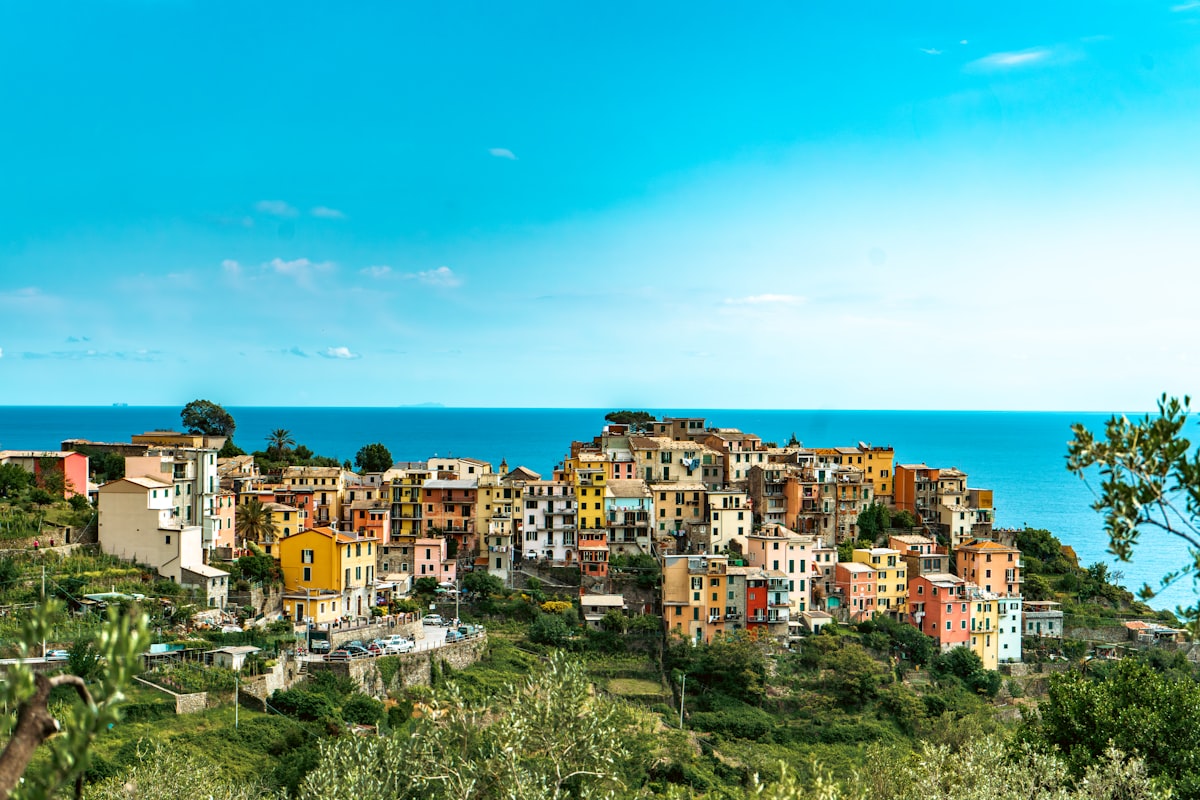
Italy vs Greece for your next Mediterranean trip, compared across cost, food, beaches, cities, transit, and family fit, with real prices and a clear verdict.
You've narrowed your next Mediterranean trip down to two finalists, and honestly, both deserve to make the shortlist. Italy and Greece each deliver the postcard version of the Mediterranean, but they're very different trips once you're on the ground. Italy gives you layered history, regional food culture, and a country you could spend a month on and still miss half of. Greece gives you slower mornings, island-hopping, and beaches that make you want to push your flight back. The Greece vs Italy debate isn't really about which one is "better." It's about which one fits the trip you actually want. This guide breaks the choice down across eight dimensions: cost, food, beaches, cities, getting around, weather, family fit, and overall vibe. We've pulled real prices, current ferry and train data, and a few opinionated takes. If you want a planning shortcut, Zenvoya can map out either trip (or both, stitched together) in one place.
At a Glance
Average daily cost (mid-range): Italy $180-260/day, Greece $140-220/day per person, per published 2026 hotel and restaurant data
Peak season: July-August in both countries (90-100°F, highest prices, biggest crowds); May, June, and September are the sweet spot
Best-known anchors: Italy = Rome, Florence, Venice, Amalfi Coast, Cinque Terre, Sicily. Greece = Athens, Santorini, Mykonos, Crete, Naxos
Flight time from US East Coast: 8-10 hours direct to Rome (FCO) or Athens (ATH); West Coast adds a connection and 4-6 hours
Getting around: Italy wins on rail (Trenitalia and Italo cover most of the country in 1-3 hours); Greece runs on ferries and short domestic flights
Food culture: Italy is region-by-region cuisine (pasta in Rome looks nothing like pasta in Sicily); Greece is mezze-and-grill, simpler ingredients, heavy on seafood and olive oil
Family-friendliness: Both work for families; Greece is easier to slow down on, Italy has the edge on kid food and shorter travel days
How to Read This Comparison
This guide is for travelers planning a single Mediterranean trip of 7-14 days. We're focused on the regions US travelers actually go to: in Italy, that's mainly Rome, Florence, Venice, the Amalfi Coast, Cinque Terre, and Sicily. In Greece, it's Athens plus the Cyclades (Santorini, Mykonos, Naxos, Paros, Milos) and Crete.
The categories below are the dimensions that drive the decision. The question is which country is right for your trip, not whether each one has nice things to see.
Greece or Italy: Which Should You Pick?
Pick Italy if you want a culture-and-food trip with multiple cities, you've never been to Europe, you want world-class museums and architecture in walking distance, you're traveling with picky eaters, or you want the easiest country in Europe to navigate by train. Italy is the safer first European trip for families who want pasta-and-pizza familiarity with serious cultural depth.
Pick Greece if you want a slower trip centered on beaches and sea, you've already done Italy or northern Europe, you want lower prices outside the two famous islands, you're chasing the postcard Mediterranean, or you want a trip that doesn't require you to be in a museum at 9 AM.
Do both if you have 14+ days and the energy for it. The classic combined route is 7 days in Italy (Rome, Florence, maybe Venice) plus 7 days in Greece (Athens plus 1-2 islands), connected by a 2-hour Aegean Airlines flight between Rome (FCO) and Athens (ATH). It's two trips' worth of logistics but worth it if you've been waiting years.
Should I visit Greece or Italy first?
For most first-time European travelers, Italy first. It's the easier country to navigate (high-speed rail connects 90% of the destinations US travelers care about), the food is more forgiving for picky eaters (pasta and pizza are everywhere), and the city-to-city density means you can do Rome, Florence, and Venice in one trip with minimal logistics. Save Greece for a second Mediterranean trip when you want a slower pace centered on islands and beaches rather than museums and cathedrals. The exception: if you've already done Italy or you specifically want beach time over city time, go Greece first.
Cost of Travel
Money shapes everything else. Greece is meaningfully cheaper than Italy across the board, especially outside the two or three most touristy islands. The gap isn't huge, but it's real.
A mid-range traveler in Italy spends $180-260/day per person on hotels, food, and activities. That budget gets you a 3-star or boutique hotel, a couple of restaurant meals, museum entries, and trains between cities. Rome and Florence run on the lower end; Venice and the Amalfi Coast push higher. Hotel prices in Italy jumped 6-9% in 2026 compared to 2025, per data published by hospitality analytics firm STR.
Greece runs $140-220/day per person at the same tier. Athens is one of the cheaper European capitals (3-star hotels under €100/night in Plaka are common). The Cyclades push prices way up in July and August: Santorini in peak season can hit $400+/night for a caldera-view room, and Mykonos is even more expensive. But step off those two islands, and Greek prices drop fast. Naxos, Paros, Milos, and Crete all deliver Cyclades vibes at 30-50% less than Santorini.
Italy wins on value in museums and historic sites (you can do five world-class museums in two days in Rome) and trains (a Frecciarossa Rome-Florence runs €30-50 booked 1-2 weeks ahead). Greece wins on value in food (a great taverna dinner with grilled octopus, Greek salad, fava, and a half-liter of barrel wine runs €20-30 outside Santorini and Mykonos; the same meal in Rome would run €40-60).
Is Greece cheaper than Italy?
Yes, Greece is cheaper than Italy across most categories. Mid-range travelers spend $140-220/day per person in Greece versus $180-260/day in Italy, a ~25% gap. The biggest savings are in food (taverna dinners run €20-30 in Greece versus €40-60 in Italy) and shoulder-season hotels outside the Cyclades. Santorini and Mykonos in peak July-August can flip the math: caldera-view hotels hit $400+/night. But step off those two islands (to Naxos, Paros, Milos, or Crete) and Greek prices drop 30-50%. Athens is one of the cheapest European capitals; Rome and Florence run mid-tier; Venice and the Amalfi Coast are the priciest in either country.

Outdoor Italian table with pasta and wine. Photo by Tommaso Ubezio on Unsplash
Food and Dining
This is where opinions get strong. Italian food is deeper, more regional, more obsessive. Greek food is simpler, ingredient-driven, more relaxing to eat.
Italy is a country where every region has its own cuisine and locals will correct you if you order the wrong pasta shape. Rome is about carbonara, cacio e pepe, and amatriciana. Florence is bistecca fiorentina and ribollita. Bologna is tagliatelle al ragù (not "spaghetti bolognese", which doesn't exist in Italy). Sicily is arancini, pasta alla Norma, and the best seafood in the country. Naples is pizza margherita the way it's supposed to be: blistered, soft, eaten in under 90 seconds.
Greek food is less regional, more focused on a smaller set of dishes done well. The core is mezze (small plates), grilled meat and fish, fresh vegetables, olive oil, and feta. The classics are everywhere: moussaka, pastitsio, souvlaki, grilled octopus, horiatiki salad, tzatziki. Athens has a serious modern Greek scene (Hytra, Cookoovaya, Aleria), but most Greek meals on the islands are about a simple table by the water with great ingredients.
Italy has the edge on wine variety (Tuscany, Piedmont, Sicily, Veneto), coffee culture (a €1.20 espresso at any neighborhood bar), and dessert (gelato, tiramisu, cannoli, sfogliatella).
Greece has the edge on simplicity (you'll eat better food more consistently with less effort), seafood (Aegean fish at island tavernas is hard to match), and price-to-quality ratio (a €25 dinner in Greece often beats a €45 dinner in Italy).
If you're a food traveler chasing dishes and regional differences, Italy is the deeper trip. If you want relaxed meals and reasonable bills, Greece is the easier win.
Beaches and Coastal Vibes
This one tilts hard toward Greece, but not as hard as people assume.
Greece has more beaches, period. Over 6,000 islands (around 200 inhabited) and 13,676 km of coastline give it the most beach options in Europe. The water clarity in the Aegean is famous: Sarakiniko on Milos, Balos on Crete, Elafonissi (pink sand) on western Crete. Beach culture is built into the day: arrive late morning, lunch at the beach taverna, swim, repeat.
Italy's coast is shorter (7,600 km) but punches above its weight. The Amalfi Coast is the most photographed stretch of Italian coastline: Positano, Praiano, Amalfi, Ravello, with cliff drops straight into turquoise water. Cinque Terre on the Ligurian coast gives you five fishing villages stacked into the cliffs. Sardinia (often overlooked by US travelers) has Caribbean-tier beaches like Cala Mariolu and La Pelosa. Sicily has wild beaches on the south coast (Scala dei Turchi).
The honest tradeoff: Greek beaches are easier to enjoy (open coastline, the beach is usually the main event). Italian coastal towns are prettier from above (Positano and Vernazza beat any Greek village for dramatic-cliffside aesthetic). Italian beaches are often pebble or paid (Italians rent loungers and umbrellas by the day at €20-40/day, called stabilimenti). Greek beaches are usually free, with optional loungers from the beach taverna for €15-25/day.
If beaches are the centerpiece of your trip, go Greece. If you want a coast that doubles as one of the most photogenic places on earth and you're okay paying for a lounger, the Amalfi Coast holds its own.
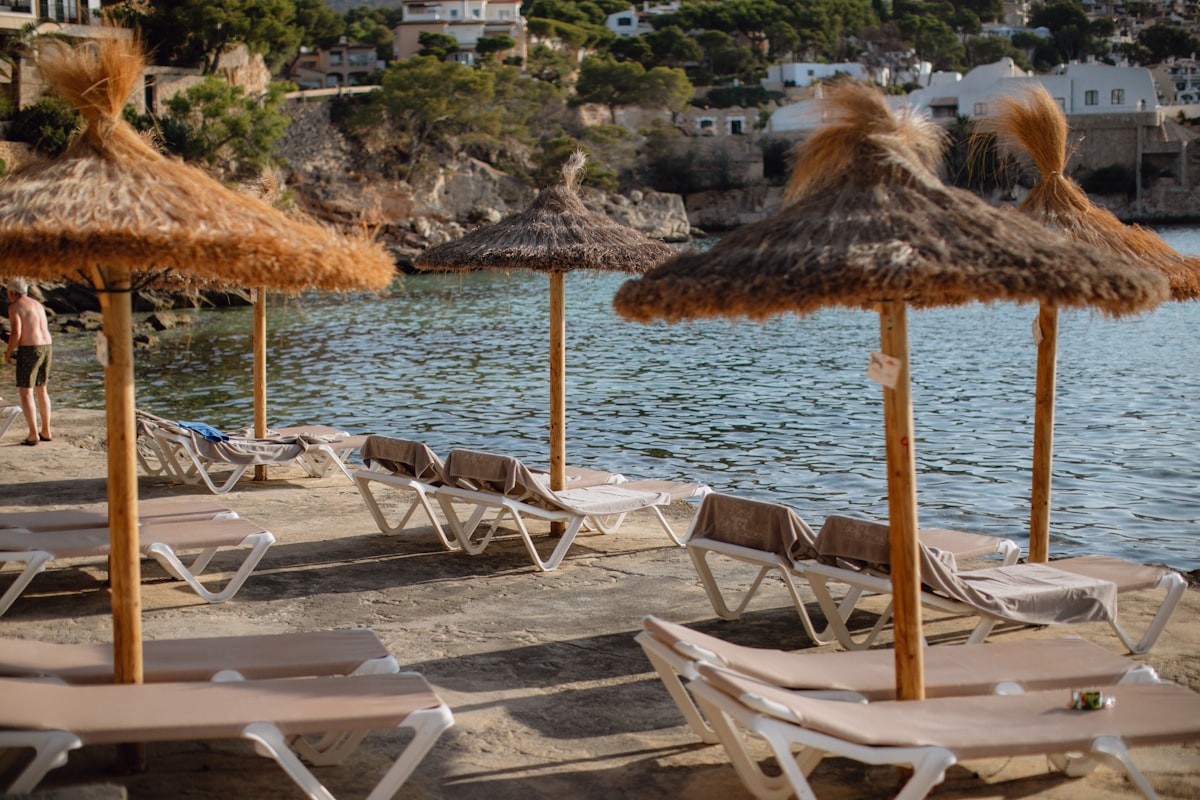
Beach loungers and umbrellas line a Mediterranean shore. Photo by Livvi Grant on Unsplash
Cities and Culture
If you're a history-and-cities person, Italy wins this one cleanly. It's not even a fair fight.
Italy has the densest concentration of world-class cities in Europe. Rome alone could be its own trip: the Colosseum, the Vatican Museums (book the Friday or Saturday evening tour to skip the day crowds), the Pantheon, Trastevere for dinner. Florence is the Renaissance in walking distance: Uffizi, Accademia (David), Duomo, day trips to Siena. Venice is a city built on water with no equal anywhere. Add Naples (chaotic, real, the best pizza on earth), Bologna (food capital), and Sicily (Palermo's Norman-Arab-Byzantine layers), and every city has its own personality.
Greece has Athens, and Athens is fantastic: the Acropolis, the Parthenon, the Ancient Agora, the Plaka neighborhood, the Anafiotika village tucked into the Acropolis hillside. The Athens Riviera is underrated as a half-day side trip. Thessaloniki up north has Byzantine and Ottoman layers Athens doesn't. After that, you're on the islands, which are about beaches and tavernas more than deep urban culture.
If you've never been to Italy and you're a museum-and-architecture traveler, you'll wish you had two more weeks. If you've been to Italy already and you want a Mediterranean trip that's lighter on city days and heavier on coast days, Greece is the better next move.
Getting Around
This is where Italy's infrastructure shines and Greece requires more planning.
Italy runs on trains. Trenitalia and Italo operate a high-speed network that connects Rome, Florence, Venice, Milan, Naples, and Bologna at 300 km/h. Rome to Florence is 1 hour 30 minutes. Florence to Venice is 2 hours. Rome to Naples is 70 minutes. Book 1-2 weeks ahead and you'll routinely find €30-50 second-class fares. The high-speed network alone makes a 4-city Italy trip easy: Rome, Florence, Venice, and Cinque Terre in 10 days without a single domestic flight or rental car.
Where Italy gets harder: the Amalfi Coast (limited rail, requires a bus or driver from Sorrento), Cinque Terre (regional train, then walking), Sicily (better with a rental car). Most Italian historic centers are ZTL zones (limited traffic zones) with fines for unauthorized cars. Park outside and take public transit in. For a full breakdown, see our how to get around Italy guide.
Greece runs on ferries and short domestic flights. There's no train network connecting the islands and the mainland rail network is limited. High-speed catamarans (SeaJets, Sea Star) cover routes like Athens-Mykonos in 2.5-3 hours; conventional ferries (Blue Star, Hellenic Seaways) take longer but cost less and handle rough weather better. Domestic flights (Aegean Airlines, Sky Express) connect Athens to most islands in 35-60 minutes for €60-180.
Two important notes on Greek ferries: they can cancel in rough weather, especially during the Meltemi winds in July and August (always pad an extra day before flying home), and you should book in advance through Ferryhopper or operator sites (SeaJets, Blue Star Ferries, Hellenic Seaways). Buying at the port the morning of works in May and September; in July and August, popular routes sell out.
On individual Greek islands, rental cars, ATVs, and scooters are the move. Local buses cover main routes but skip the best beaches. The verdict: Italy is the easier country to move around in for a multi-city trip on rails. Greece is more boat-and-plane logistics but rewards you with the islands.
Best Time to Visit
Both countries share roughly the same Mediterranean climate, but the peak-and-shoulder calendar differs slightly.
Italy sweet spots: May and early June (warm but not hot, 70-80°F, wildflowers in Tuscany, beach water still cool but swimmable), September (crowds drop after the Italian summer holiday, prices ease, 75-85°F), and October (truffle season in Piedmont, wine harvest, perfect city weather).
Greece sweet spots: Late May and June (sea hits 68-72°F, highs 75-82°F, crowds 30-40% lighter than peak per Greek National Tourism Organization arrival data), September (sea is warmest at 75-78°F, highs still 78-85°F), and early October (Athens stays warm, but most island hotels and tavernas close by mid-October).
Avoid in both: July and August. Hottest (95-100°F regularly in Rome and Athens), most expensive, most crowded. Italian cities feel uncomfortable mid-day. Greek beaches are jammed. Most Italians take their own vacation in August, so some restaurants and small shops close for two weeks.
Avoid in Greece specifically: Mid-October through April. Most island hotels and tavernas close. Athens is fine year-round, but the islands shut down.
Avoid in Italy specifically: Late November through February for coastal regions. Cinque Terre in winter is largely closed. Cities like Rome and Florence stay great (and cheaper).
If you want both shoulder-season pricing and warm-enough weather, target late May, early June, or September.
For more on planning around the summer rush, our summer planning guide breaks down peak vs. shoulder pricing.
Family Friendliness
Which is better for families, Greece or Italy?
Both work, but the trade-off is structure vs slow pace. Italy is better for families that want full days with cultural anchors: world-class museums, walkable cities, and reliable kid food (pasta, pizza, gelato) at every restaurant. High-speed trains keep travel days short. Greece is better for families that want simpler days centered on beaches: most island days are walk-swim-taverna-repeat, which is low-stress with kids. Mezze lets picky eaters graze instead of committing to one entrée. Skip Mykonos and Santorini with younger kids (party scene, expensive, stressful logistics). Naxos, Paros, or Crete are the family picks.
Both countries work well for families. The differences come down to logistics, food, and pacing.
Italy advantages: Pasta and pizza are everywhere, so picky eaters do fine. High-speed trains keep travel days short. Museums and covered markets help on rainy or hot days. Strollers handle most cities, though cobblestones in Florence and Trastevere are rough.
Greece advantages: Beach days are simple (walk, swim, taverna lunch, repeat). Outside the two famous islands, Naxos, Paros, Crete, and Milos are calmer. Mezze lets kids graze instead of committing to one entrée. Late dinners are the norm, so a 9 PM taverna meal works for tired kids.
Italy tradeoffs: Lines at the Colosseum, Uffizi, and Vatican Museums can hit 90+ minutes in peak season. Mid-day touring with kids in 95°F+ Rome is rough in July and August.
Greece tradeoffs: Ferry delays with tired kids are no fun, so build buffer days. Smaller Cyclades (Folegandros, Sifnos) are charming but light on family infrastructure. Stick to Naxos, Paros, or Crete for the easiest family trip.
If your family wants culture-rich and food-easy, go Italy. If your family wants a slower pace centered on beaches, go Greece.
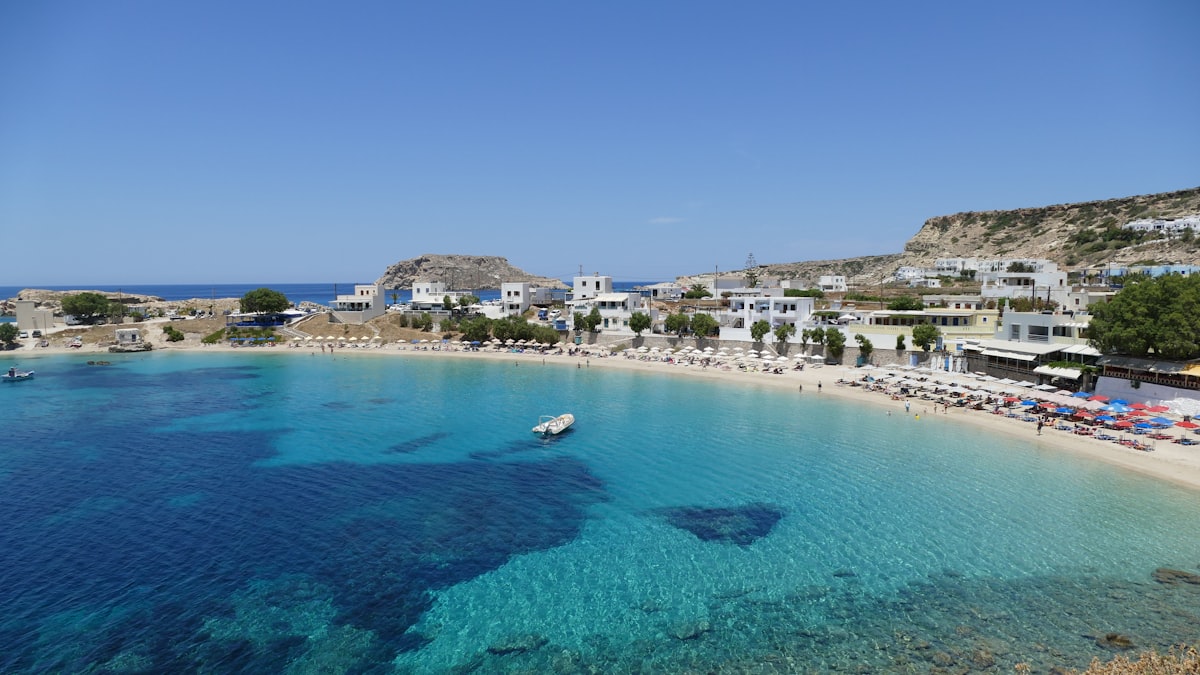
Turquoise water meets a sandy Greek island beach. Photo by Joris Beugels on Unsplash
Side-by-Side Comparison
Italy | Greece | |
|---|---|---|
Mid-range daily cost (per person) | $180-260 | $140-220 |
Best-known anchors | Rome, Florence, Venice, Amalfi, Cinque Terre, Sicily | Athens, Santorini, Mykonos, Crete, Naxos |
Food culture | Hyper-regional, hundreds of dishes by city | Mezze + grill, simpler, ingredient-driven |
Best for beaches | Amalfi Coast, Sardinia, Sicily | Cyclades, Crete, Ionian islands |
Best for cities | Unmatched (Rome, Florence, Venice, Naples) | Athens (excellent), then island towns |
Getting around | High-speed trains link 90% of the country | Ferries + short domestic flights |
Peak summer crowding | High (Rome, Florence, Venice, Amalfi) | High (Santorini, Mykonos); lower elsewhere |
Family-friendliness | Strong (kid food, short travel days) | Strong (beach pace, family-style food) |
Best months | May, June, September, October | Late May, June, September, early October |
Avoid | July-August heat and crowds | Mid-October to April (island shutdown) |
Best for | History + food + city-hopping | Beaches + slower pace + island-hopping |
Choose this if | You want layered culture and density | You want sun, sea, and easy mornings |
Costs and trends based on published 2026 hotel, restaurant, and transportation pricing across the most-visited regions in each country, plus Greek National Tourism Organization and ENIT (Italian National Tourist Board) arrival data.
Ready to Plan Your Mediterranean Trip?
The hardest part of an Italy or Greece trip isn't picking the country. It's stitching together flights, hotels, intercity transport, and the day-by-day rhythm that actually matches how you travel. Zenvoya's AI trip planner can draft an itinerary for either country (or both) in minutes, swap hotels or stops based on your budget, and flag the logistics that usually trip people up (ferry timing in Greece, ZTL zones in Italy, peak-season hotel scarcity). Start your trip plan in Zenvoya's AI trip planner and you'll have a working draft before you're done procrastinating on the choice.
For a deeper dive into Greece, our Greek Islands itinerary lays out a 7-10 day loop through Athens, Mykonos, and Santorini with ferry timing and budget tiers. And if you want to compare Italy and Greece against other Mediterranean options, our best summer destinations roundup shows where they stack up against Lisbon, Mallorca, and Croatia.